Supreme Court's Executive Authority Rulings: Reshaping Agencies
Three pivotal Supreme Court rulings on executive authority are set to significantly alter the operational landscape and regulatory power of federal agencies, impacting various sectors across the United States.
The role of federal agencies in American governance is vast, influencing everything from environmental protection to financial markets. Understanding the profound implications of the recent Supreme Court Docket Breakdown: How 3 Major Rulings on Executive Authority Will Reshape Federal Agencies is crucial for citizens and policymakers alike, as these decisions promise to redefine the very fabric of administrative power.
The evolving landscape of administrative law
The Supreme Court's recent pronouncements on executive authority mark a significant juncture in American administrative law. For decades, federal agencies have operated with a broad mandate, often relying on deference from the judiciary to interpret ambiguous statutory language. These new rulings signal a potential recalibration of that balance, emphasizing a more robust judicial oversight of agency actions.
The concept of administrative law itself is dynamic, constantly adapting to societal changes and political philosophies. Agencies are tasked with implementing legislation passed by Congress, a role that inherently involves a degree of discretion and expertise. However, the extent of this discretion has been a perennial source of debate, with arguments centering on democratic accountability, separation of powers, and the practicalities of governance in a complex world.
Historical context of agency power
To fully grasp the magnitude of these recent Supreme Court decisions, it is essential to consider the historical trajectory of federal agency power. The New Deal era saw a dramatic expansion of the administrative state, as Congress delegated significant authority to agencies to address the economic and social crises of the time. This delegation was largely upheld by the courts, leading to the development of doctrines that supported agency autonomy.
- Chevron deference: Established in 1984, this doctrine directed courts to defer to an agency's reasonable interpretation of an ambiguous statute it administers.
- Auer deference: Similar to Chevron, but applied to an agency's interpretation of its own regulations.
- Nondelegation doctrine: While theoretically limiting Congress's ability to delegate legislative power, it has rarely been successfully invoked to strike down agency actions.
These doctrines have provided a stable framework for agency operations, allowing them to issue regulations and make policy decisions with a degree of certainty. The recent Supreme Court cases challenge the foundations of these long-standing principles, suggesting a potential shift towards greater judicial scrutiny and a more constrained role for administrative agencies.
In essence, the court appears to be re-evaluating the fundamental premise of how much power Congress can delegate to unelected bureaucrats and how much leeway agencies should have in interpreting those mandates. This re-evaluation is driven by a mix of legal philosophy, concerns about accountability, and a desire to reinforce the separation of powers as envisioned by the Constitution. The implications for future regulatory actions and the overall structure of federal governance are profound.
Ruling one: reining in agency interpretations
The first of the three major rulings directly addresses the scope of agency interpretive authority, signaling a potential retreat from decades of judicial deference. This decision focuses on limiting how broadly federal agencies can interpret the statutes they are charged with enforcing, demanding a clearer legislative mandate for significant policy shifts. This shift is not merely procedural; it reflects a deeper philosophical commitment to ensuring that major policy decisions are made by Congress, the most democratically accountable branch of government.
Impact on Chevron deference
While the ruling may not explicitly overturn Chevron v. Natural Resources Defense Council, its implications are clear: the era of broad deference to agency interpretations is likely coming to an end. The Court's decision emphasizes that courts should not automatically defer to an agency's interpretation if the statute's language is ambiguous. Instead, courts are encouraged to use traditional tools of statutory interpretation to determine Congress's intent, reserving deference for only truly ambiguous provisions where an agency's interpretation is demonstrably reasonable and within its delegated authority.
- Increased judicial scrutiny: Federal judges will now have more latitude to substitute their own interpretations for those of agencies.
- Burden on Congress: Lawmakers will need to craft more precise and specific legislation to avoid judicial reinterpretation of agency mandates.
- Uncertainty for agencies: Agencies may face greater challenges in implementing regulations, as their interpretations are more likely to be challenged and potentially overturned by courts.
This ruling fundamentally alters the power dynamic between the judiciary and the administrative state. Agencies will need to be more cautious and precise in their regulatory actions, ensuring that their interpretations are firmly grounded in clear statutory language. The potential for increased litigation challenging agency rules is substantial, as regulated entities may find more favorable grounds for challenging interpretations they deem overly broad or unsupported by congressional intent.
Ultimately, this decision pushes for a more active judiciary in overseeing the administrative state, potentially leading to a more conservative approach to regulation. It underscores the Court's commitment to ensuring that policy-making authority remains primarily with the legislative branch, thereby strengthening the separation of powers doctrine. The practical effects will be felt across all federal agencies, forcing a re-evaluation of how they develop and justify their regulatory frameworks.
Ruling two: limiting executive orders and presidential power
The second major Supreme Court ruling addresses the President's authority to issue executive orders and directives, particularly those that significantly impact federal agencies without explicit congressional authorization. This decision aims to clarify the boundaries of presidential power, ensuring that executive actions do not overstep legislative mandates or infringe upon areas traditionally reserved for Congress. It represents a significant check on the executive branch's ability to unilaterally implement broad policy changes.
The scope of presidential directives
Historically, presidents have utilized executive orders to manage the federal government, often filling in gaps left by legislation or responding to immediate crises. However, the use of executive orders has expanded over time, sometimes leading to accusations of presidential overreach. This ruling seeks to delineate what constitutes legitimate executive action versus what requires legislative approval, especially when such actions impose substantial new burdens or costs on the public or fundamentally alter existing policy frameworks.
The Court's decision suggests a heightened scrutiny of executive orders that lack clear statutory backing. It implies that for significant policy shifts, particularly those with major economic or social impacts, the President must be able to point to specific congressional authorization. This approach strengthens the role of Congress in policy-making and limits the President's ability to bypass the legislative process through executive fiat.
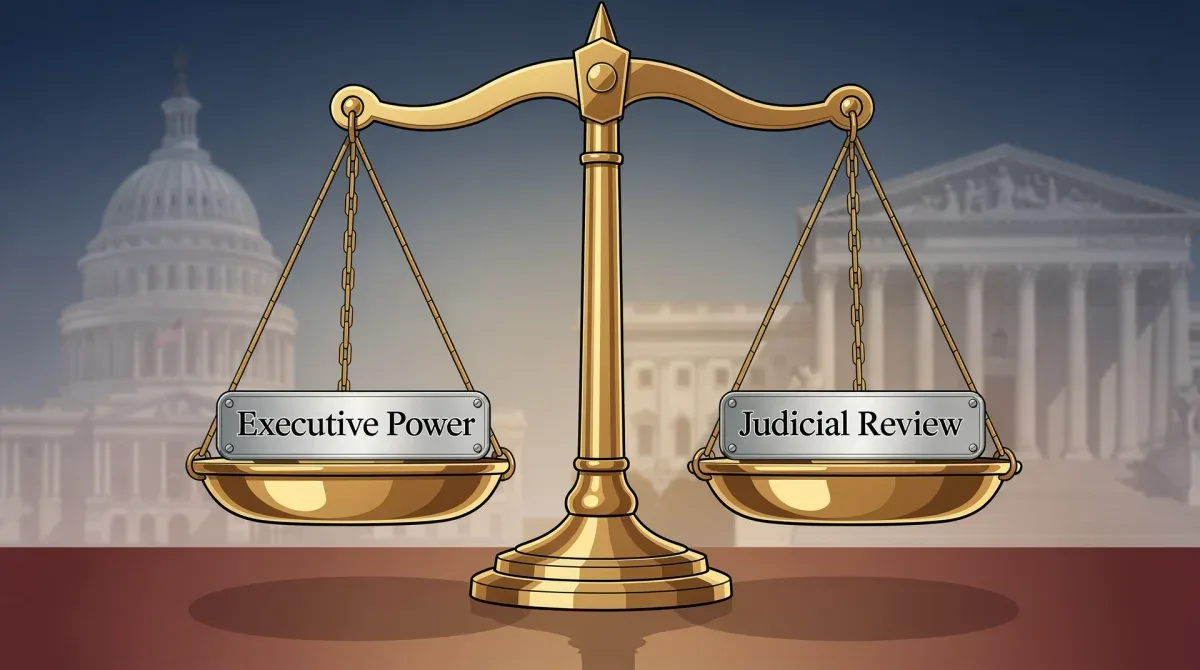
The implications for federal agencies are considerable. Many agency initiatives and policy directions stem directly from presidential executive orders. With a more constrained view of presidential authority, agencies may find their mandates shifting or facing legal challenges if the underlying executive order is deemed to exceed presidential powers. This could lead to:
- Reduced agency agility: Agencies might be slower to respond to new challenges if presidential directives require more explicit legislative support.
- Increased congressional importance: Congress will become an even more critical arena for policy debates, as presidential actions become more dependent on legislative backing.
- Legal challenges to existing orders: Past executive orders that are seen as pushing the boundaries of presidential power could face renewed legal scrutiny.
This ruling is a powerful affirmation of the separation of powers, reinforcing the idea that while the President leads the executive branch, their authority is not boundless. It compels a more collaborative approach between the executive and legislative branches for significant policy endeavors, potentially leading to more deliberate and consensus-driven governance. Agencies will need to navigate this new landscape carefully, ensuring that their actions are not only legally sound but also aligned with a more narrowly defined scope of executive authority.
Ruling three: judicial review of agency procedures
The third significant Supreme Court ruling focuses on enhancing judicial review of the procedures federal agencies follow when promulgating rules and making decisions. This decision underscores the importance of transparency, public participation, and adherence to administrative process requirements, ensuring that agencies do not cut corners or act arbitrarily. It provides a stronger basis for courts to scrutinize how agencies arrive at their decisions, not just the decisions themselves.
Strengthening the Administrative Procedure Act (APA)
The Administrative Procedure Act (APA) sets forth the basic requirements for agency rule-making and adjudication, including provisions for public notice, comment periods, and reasoned decision-making. This ruling effectively strengthens the APA by emphasizing that courts should rigorously enforce these procedural requirements. It pushes back against any tendency by agencies to bypass or minimize public input, reinforcing the idea that sound policy-making depends on a robust and transparent process.
The Court's decision suggests that agencies must not only demonstrate that their final rules are reasonable but also that they followed a fair and thorough process in developing them. This includes adequately responding to public comments, providing a clear rationale for their choices, and considering alternative approaches. Failure to meet these procedural benchmarks could lead to rules being vacated by courts, forcing agencies to restart the rule-making process.

The practical implications for federal agencies are substantial:
- Enhanced procedural diligence: Agencies will need to meticulously document their rule-making processes, ensuring full compliance with the APA.
- Greater public engagement: There will be an increased emphasis on meaningfully engaging with stakeholders and the public during rule development.
- Risk of procedural challenges: Opponents of agency rules will have stronger grounds to challenge them based on alleged procedural deficiencies, even if the substance of the rule is sound.
This ruling aims to foster greater accountability within the administrative state by focusing on the 'how' of agency decision-making. It ensures that agencies operate within prescribed legal frameworks and provides an important safeguard against arbitrary or opaque governance. For citizens and regulated entities, it offers a more robust mechanism to challenge agency actions that may not have followed due process. Ultimately, it encourages a more deliberate, transparent, and participatory approach to federal regulation, which benefits all stakeholders by promoting trust and fairness in government actions.
Combined impact on federal agencies and governance
The confluence of these three Supreme Court rulings presents a formidable challenge and an opportunity for federal agencies and the broader landscape of American governance. Individually, each decision introduces a significant shift; together, they portend a fundamental restructuring of the administrative state. Agencies will no longer be able to rely on prior levels of judicial deference or expansive interpretations of executive authority. Instead, they must operate within stricter boundaries, with increased scrutiny from both the judiciary and, by extension, the legislative branch.
One of the most immediate impacts will be a likely surge in litigation challenging agency actions. Regulated industries, advocacy groups, and states will have more robust legal grounds to contest rules and policies, leading to potential delays and uncertainty in policy implementation. Agencies will need to dedicate more resources to legal defense and to ensuring their rule-making processes are impeccably documented and justified.
Navigating the new regulatory environment
Federal agencies will need to adapt quickly to this new judicial posture. This will involve:
- Rethinking statutory interpretation: Agencies must adopt a more conservative approach to interpreting ambiguous statutes, seeking clearer congressional mandates for significant policies.
- Strengthening internal review: Enhanced internal legal and procedural review processes will be crucial to pre-empt challenges and ensure compliance with heightened judicial standards.
- Collaborating with Congress: Agencies may find it necessary to work more closely with Congress to secure explicit legislative authorization for their initiatives, rather than relying on broad delegations or executive orders.
This new environment also places a greater onus on Congress. If the judiciary is less willing to defer to agency interpretations, Congress will need to be more precise and proactive in crafting legislation. Ambiguous statutes that once allowed agencies flexibility may now lead to judicial invalidation of agency rules. This could spur a period of increased legislative activity aimed at clarifying existing laws and providing clearer directives for agencies.
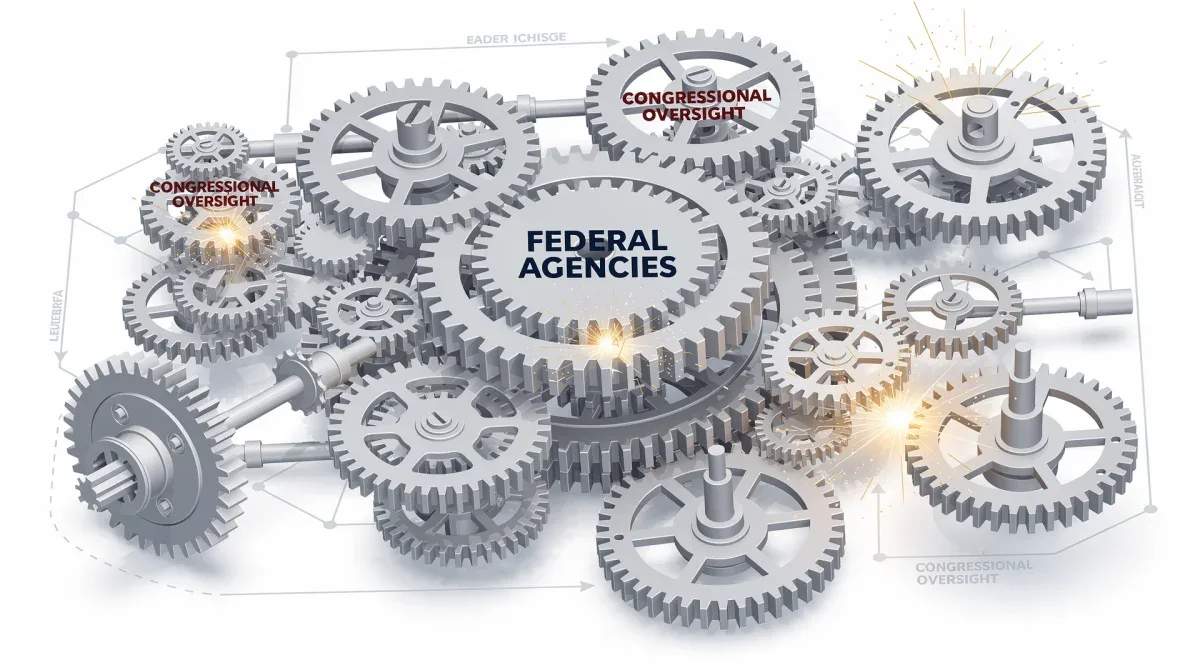
Moreover, the rulings could affect the balance of power among the branches of government. By asserting a more active role in overseeing the administrative state, the judiciary is arguably reclaiming some of the authority that had gradually shifted to the executive branch and its agencies. This rebalancing could lead to a more constrained executive and a more empowered legislative branch, at least in theory, fostering a system of governance that more closely adheres to traditional separation of powers principles.
The long-term effects are difficult to predict with absolute certainty, but a more cautious, procedurally rigorous, and congressionally dependent administrative state seems likely. This shift will undoubtedly reshape how federal agencies operate, how policies are made, and how the public interacts with its government.
Challenges and opportunities for future governance
The Supreme Court's recent rulings, while aiming to clarify the boundaries of executive authority, also introduce a complex array of challenges and opportunities for future governance. On one hand, the increased judicial scrutiny and emphasis on congressional intent could lead to a more deliberate and democratically accountable administrative state. On the other hand, it risks creating paralysis within agencies, making it harder for them to respond effectively to evolving societal needs and complex problems.
One significant challenge is the potential for regulatory stagnation. If agencies are constantly facing legal challenges and are required to seek explicit congressional authorization for every significant policy, the pace of regulation could slow considerably. This could be particularly problematic in rapidly evolving sectors like technology or environmental protection, where timely regulatory responses are often critical. The balance between accountability and efficiency will be a constant tension in the years to come.
Adapting to a new judicial paradigm
For federal agencies, the opportunity lies in adapting to this new judicial paradigm by embracing greater transparency, precision, and collaboration. By proactively engaging with Congress, thoroughly documenting their decision-making processes, and clearly articulating the statutory basis for their actions, agencies can mitigate the risks of judicial invalidation. This might also foster greater public trust, as agency actions are perceived as more legitimate and less arbitrary.
- Enhanced expertise: Agencies will need to invest further in legal and policy expertise to navigate the heightened scrutiny.
- Public communication: Clearer communication about the rationale and legal basis for agency decisions will be paramount.
- Innovation in policy-making: Agencies might explore new approaches to policy development that are less reliant on broad interpretations and more aligned with specific legislative directives.
Another opportunity lies in the potential for a more engaged and empowered Congress. If significant policy decisions are truly to be made by the legislative branch, it could revitalize congressional oversight and debate. This might lead to more robust, bipartisan solutions to national problems, as agencies and the executive branch are compelled to work more closely with elected representatives. However, this also assumes that Congress is willing and able to step up to this increased responsibility, avoiding legislative gridlock.
Ultimately, these rulings force a re-evaluation of the administrative state's role in a constitutional democracy. They challenge the assumption that agencies are best positioned to fill legislative gaps and instead push for a stronger emphasis on explicit democratic authorization. While this may introduce friction and slow down certain aspects of governance, it also offers a chance to strengthen foundational principles of American law and ensure that governmental power remains accountable to the people through their elected representatives.
Looking ahead: the long-term implications
The long-term implications of these Supreme Court rulings on executive authority will undoubtedly shape the future trajectory of federal governance. While the immediate effects will likely involve increased litigation and a period of adjustment for federal agencies, the enduring impact could be a fundamental re-calibration of power dynamics within the U.S. government. This re-calibration aims to restore what some perceive as a more traditional balance among the three branches, with a more constrained executive and administrative state, and a more assertive judiciary and legislative branch.
One major long-term implication is the potential for a more defined and less flexible regulatory environment. Agencies, operating under stricter mandates and judicial oversight, may become less nimble in responding to emerging issues or technological advancements. This could necessitate a more frequent and proactive role for Congress in updating statutes and providing clear guidance, a task that has historically been challenging given legislative gridlock.
Shifting institutional responsibilities
The rulings could also lead to a significant shift in institutional responsibilities. The judiciary, by asserting a more active role in statutory interpretation and procedural review, will likely become a more central player in policy debates. This raises questions about the appropriate role of unelected judges in shaping public policy, even if their stated goal is to enforce constitutional limits on executive power.
- Judicial policy influence: Courts may inadvertently become more involved in the substance of policy by striking down agency rules on procedural or interpretive grounds.
- Congressional capacity: The effectiveness of this new paradigm will heavily depend on Congress's capacity to legislate clearly and decisively.
- Executive adaptation: Future administrations will need to develop new strategies for achieving their policy goals within these tighter constraints, potentially emphasizing legislative engagement over unilateral executive action.
Furthermore, the decisions could influence the types of individuals appointed to federal agencies and the judiciary. Presidents might seek agency heads who are more adept at navigating a legally complex and judicially scrutinized environment, while judicial appointments might increasingly focus on candidates who align with a more limited view of administrative power. This could entrench the effects of these rulings for generations.
Ultimately, the long-term impact hinges on how all three branches of government adapt to these new judicial pronouncements. Will Congress rise to the occasion and provide clearer legislative directives? Will agencies develop more robust and transparent processes? And will the judiciary maintain a consistent and principled approach to its enhanced oversight role? The answers to these questions will determine whether these rulings lead to a more accountable and effective government, or simply introduce new forms of institutional friction and policy uncertainty.
| Key Ruling Area | Impact on Federal Agencies |
|---|---|
| Agency Interpretations | Reduced deference to agency interpretations of ambiguous statutes, requiring clearer congressional mandates. |
| Executive Orders | Limited presidential authority for significant policy via executive orders without explicit legislative backing. |
| Agency Procedures | Enhanced judicial review of agency rule-making procedures, emphasizing transparency and public participation. |
| Overall Governance | Shift towards a more constrained executive, more assertive judiciary, and greater congressional responsibility. |
Frequently asked questions about Supreme Court rulings
What is the primary impact of these rulings on federal agencies?▼The primary impact is a significant reduction in agency autonomy and interpretive power. Agencies will face heightened judicial scrutiny, requiring more precise adherence to statutory language and procedural requirements, potentially slowing regulatory processes and increasing legal challenges.
How do these rulings affect the balance of power?▼These rulings aim to rebalance power by strengthening the judiciary's oversight role and emphasizing Congress's legislative authority. This could lead to a more constrained executive branch and administrative state, aligning more closely with traditional separation of powers principles.
Will these decisions lead to more litigation against federal agencies?▼Yes, it is highly probable. Regulated entities and other stakeholders will have stronger legal grounds to challenge agency rules based on statutory interpretation or procedural deficiencies, potentially increasing the volume and success rate of such lawsuits.
What role does Congress play in this new landscape?▼Congress's role becomes more critical. To ensure effective governance, lawmakers will need to provide clearer and more specific statutory mandates to agencies, avoiding ambiguities that could lead to judicial reinterpretation or invalidation of agency actions.
How will executive orders be affected by these Supreme Court decisions?▼Executive orders that involve significant policy changes or lack clear statutory authority will face greater scrutiny. Presidents may need to seek more explicit congressional backing for major initiatives, limiting the use of executive orders for broad, unilateral policy implementation.
Conclusion
The Supreme Court's recent docket breakdown concerning executive authority marks a pivotal moment in American administrative law. These three major rulings collectively signal a significant reorientation of power within the federal government, emphasizing judicial oversight, congressional intent, and procedural rigor. Federal agencies must now navigate a more constrained and scrutinized environment, requiring greater precision in statutory interpretation, adherence to process, and, potentially, increased collaboration with the legislative branch. While this shift may introduce challenges in policy implementation, it also presents an opportunity to foster a more accountable, transparent, and constitutionally balanced system of governance for the future.
