Slash Streaming Costs: Bundling Deals 2026
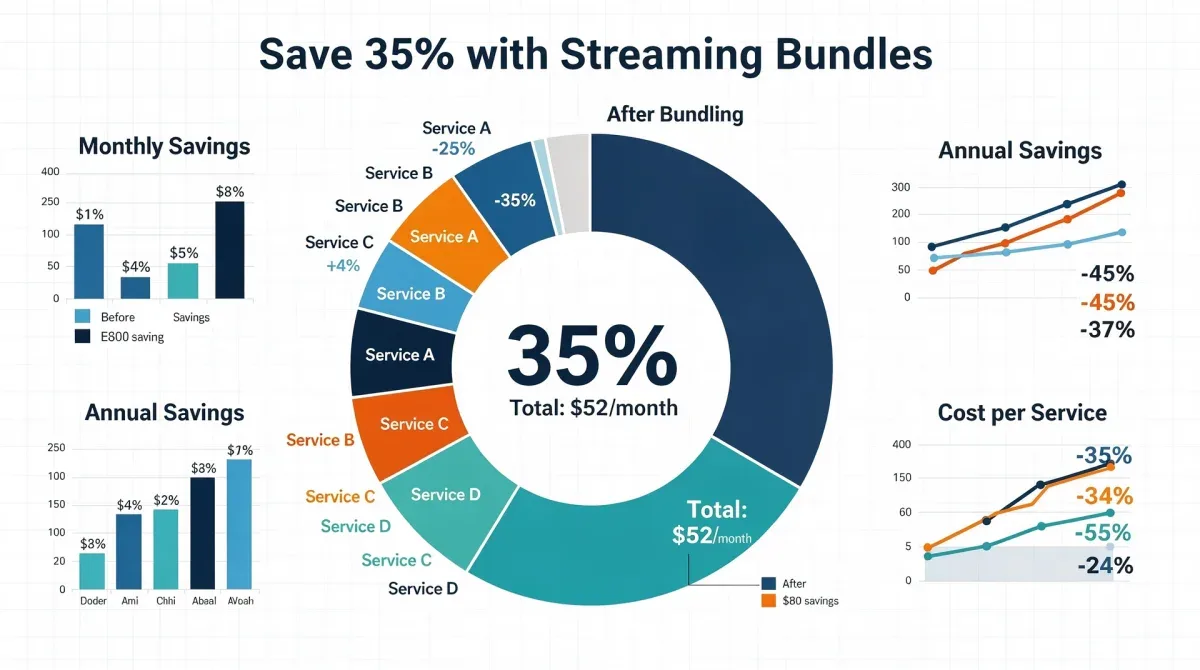
By strategically analyzing and adopting streaming bundling deals, consumers can achieve substantial annual savings of up to 35% on their entertainment subscriptions in 2026, optimizing their digital content consumption.
Are you feeling the pinch of ever-increasing monthly bills for your favorite streaming services? In 2026, learning How to Slash Your Annual Streaming Subscription Costs by 35% in 2026 Using Bundling Deals isn't just a smart move; it's a financial imperative for many households. This guide will navigate you through the evolving landscape of streaming bundles, offering actionable strategies to significantly reduce your entertainment expenses without sacrificing your viewing pleasure.
Understanding the streaming landscape in 2026
The streaming industry continues its rapid evolution in 2026, characterized by an unprecedented proliferation of services and a growing trend towards consolidation. What was once a simple choice between a few major players has transformed into a complex ecosystem where consumers often subscribe to multiple platforms to access diverse content. This fragmentation, while offering variety, has also led to subscription fatigue and escalating costs for the average viewer.
As competition intensifies, streaming providers are constantly innovating their offerings, not just in content but also in pricing models. The focus is shifting from individual subscriptions to more integrated, value-driven packages. This is where bundling deals emerge as a pivotal strategy for both providers to retain subscribers and for consumers to manage their budgets effectively.
The rise of multi-service partnerships
In response to subscriber churn and market saturation, major players are forging strategic alliances. These partnerships allow them to offer combined services at a discounted rate, creating a more attractive proposition than subscribing to each service individually. Understanding these alliances is the first step towards unlocking significant savings.
- Content synergy: Bundles often combine services with complementary content libraries, ensuring a broader appeal.
- Provider collaboration: Companies are moving beyond direct competition to explore mutually beneficial bundling opportunities.
- Customer retention: Bundles help reduce churn by offering greater value and convenience to subscribers.
The streaming landscape in 2026 demands a proactive approach from consumers. Simply subscribing to services as they are released is no longer sustainable for those aiming to control their expenditures. By understanding the underlying dynamics of this market, particularly the push towards bundling, you can position yourself to make informed decisions that benefit your wallet.
Identifying the best bundling deals for maximum savings
The key to slashing your streaming costs by 35% lies in meticulously identifying and leveraging the best bundling deals available in 2026. This isn't a one-size-fits-all approach; what works for one household might not be ideal for another. It requires a thorough assessment of your viewing habits, preferred content, and the specific offerings from various providers.
Start by auditing your current subscriptions. Are you paying for services you rarely use? Are there overlapping content libraries that could be consolidated? Once you have a clear picture of your current spending and consumption, you can begin to explore the bundles that offer genuine value.
Evaluating popular bundle options
Several types of bundling deals have become prominent in 2026, each with its own advantages. These typically fall into categories such as telecom-led bundles, direct streaming platform bundles, and niche content packages. Telecom companies, for instance, often integrate streaming services with internet or mobile plans, offering substantial discounts as an incentive.
- Telecom bundles: Internet or mobile providers often partner with streaming services, offering packages that can significantly reduce your overall utility and entertainment costs.
- Direct platform bundles: Major streaming giants might bundle their own services (e.g., Disney+, Hulu, ESPN+) or partner with a select few other platforms to create attractive packages.
- Niche content bundles: For specialized interests, smaller bundles might combine services focusing on specific genres like sports, documentaries, or international content.

When evaluating these options, always calculate the individual cost of each service versus the bundled price. Don't be swayed by perceived savings without doing the math. Look for flexibility in bundles, ensuring you're not locked into long-term contracts that might not align with your future viewing needs. The goal is to find a bundle that not only saves you money but also enhances your overall entertainment experience without unnecessary additions.
Strategic auditing of your current streaming subscriptions
Before diving into any new bundling deals, a critical first step is a comprehensive audit of your existing streaming subscriptions. Many consumers accumulate services over time, often forgetting what they subscribe to or how frequently they use each platform. This oversight can lead to significant wasted expenditure, making it impossible to truly maximize savings.
Begin by listing every streaming service you currently pay for, along with its monthly cost. Then, honestly assess your usage for each. Do you watch content on this platform regularly, or is it a service you subscribed to for a specific show and then forgot to cancel? This honest evaluation is fundamental to identifying redundant or underutilized subscriptions.
Creating a content consumption matrix
To gain a clearer picture, consider creating a simple content consumption matrix. This involves noting down which family members use which services, what types of content they watch, and how often they engage with each platform. This can reveal patterns of usage and help you identify services that are essential versus those that are merely 'nice-to-have'.
- Identify core services: Determine which platforms are indispensable for your household's primary viewing needs.
- Spot underutilized subscriptions: Pinpoint services that are rarely accessed, making them prime candidates for cancellation or bundling.
- Track content overlap: Look for instances where similar content is available on multiple platforms you subscribe to, indicating potential redundancies.
Once you have this detailed overview, you can start making informed decisions. It might reveal that a service you thought was essential is actually rarely used, or that by canceling a couple of individual subscriptions, you can afford a more comprehensive bundle that covers all your needs at a lower overall cost. This strategic auditing is the bedrock of achieving significant savings.
Negotiating and customizing your streaming bundles
While many bundling deals are pre-packaged, there's often more room for negotiation and customization than consumers realize, especially in 2026's competitive market. Providers are increasingly willing to tailor offerings to retain subscribers and attract new ones. Don't be afraid to engage with customer service or explore hidden customization options on their websites.
The first step in negotiation is to be armed with information. Know the prices of competing bundles, understand your own viewing needs, and be prepared to articulate the value you seek. Sometimes, simply expressing an intent to cancel due to cost can open the door to better deals or customized packages.
Leveraging loyalty and new customer offers
Providers often roll out special promotions for both long-term loyal customers and enticing offers for new subscribers. If you've been with a service for a while, inquire about loyalty discounts or upgrades. If you're considering a new bundle, actively seek out new customer incentives, which can often include significant introductory savings or additional perks.
- Inquire about loyalty programs: Ask your current providers if they have special rates for long-standing subscribers or if you can bundle services you already have with them.
- Explore new customer discounts: When considering a new bundle, look for promotional periods or sign-up bonuses that can reduce your initial costs.
- Combine with other services: Consider bundles that integrate with your existing telecom, internet, or mobile plans, as these often provide the deepest discounts.
Customizing your bundle also means ensuring you're not paying for channels or features you don't need. Some bundles offer flexibility to swap out certain services or add specific premium channels à la carte at a reduced rate. By proactively engaging with providers and understanding the nuances of their offerings, you can construct a streaming package that perfectly fits your entertainment desires and your budget, leading to those coveted 35% savings.
Future-proofing your streaming budget: 2026 and beyond
Achieving a 35% reduction in streaming costs in 2026 is an excellent short-term goal, but true financial mastery involves future-proofing your entertainment budget. The streaming landscape is dynamic, with new services emerging and existing ones evolving their pricing and content strategies. Staying ahead requires a proactive, adaptable approach to your subscriptions.
Regularly review your bundles and individual subscriptions, ideally on a quarterly or semi-annual basis. What was the best deal six months ago might not be the most cost-effective option today. New bundles might have emerged, or your viewing habits might have changed. This continuous monitoring ensures you remain agile and can pivot to better deals as they arise.
Anticipating market shifts and new technologies
Keep an eye on industry news and technological advancements. The introduction of new streaming technologies, changes in content licensing agreements, or even mergers and acquisitions among media companies can significantly impact the availability and pricing of bundles. Being informed allows you to anticipate these shifts and adjust your strategy accordingly.
- Stay informed on industry news: Follow tech and entertainment news outlets to learn about new services, partnerships, and pricing changes.
- Embrace trial periods strategically: Utilize free trial periods for new services or bundles to assess their value before committing financially.
- Consider annual payments: If a service is a definite long-term keeper, investigate whether annual payment options offer a discount over monthly billing.
Moreover, consider the long-term value of your subscriptions. Are you investing in services that offer exclusive content you truly value, or are you just subscribing out of habit? By taking a forward-looking perspective and integrating adaptability into your streaming strategy, you can ensure that your entertainment budget remains optimized not just for 2026, but for years to come, maintaining significant savings.
Real-world examples of successful bundling strategies
To truly grasp the potential of bundling, it's helpful to look at real-world examples of how individuals and families have successfully slashed their streaming costs. These case studies illustrate practical application of the strategies discussed, demonstrating that a 35% reduction is not only achievable but often exceeded with careful planning.
Consider 'The Miller Family,' who initially paid for Netflix, Hulu (ad-free), Disney+, and HBO Max individually, totaling over $60 per month. By opting for a telecom bundle that included a basic Hulu + Disney+ + ESPN+ package and then adding a discounted HBO Max through their mobile provider, they reduced their monthly outlay to just under $40, representing a 33% saving while gaining ESPN+.
Diverse approaches to savings
'Sarah,' a single professional, focused on content rotation. Instead of subscribing to all her desired services simultaneously, she now rotates between two core services and adds a third for a month or two for specific shows, then cancels. This, combined with a student discount bundle for a news streaming service, cut her costs by over 40% compared to her previous simultaneous subscriptions.
- Telecom integration: Many consumers find significant savings by combining streaming services with their existing internet or mobile plans.
- Content rotation: Subscribing to services for limited periods to catch specific shows and then canceling, reduces long-term commitment.
- Family sharing plans: Leveraging family plans where available can spread the cost among multiple users, making individual contributions cheaper.
These examples highlight that flexibility and a willingness to adapt are crucial. There's no single path to savings, but rather a combination of smart choices tailored to individual needs. By learning from these successful strategies, you can apply similar principles to your own situation and unlock substantial reductions in your annual streaming expenditure, making your entertainment budget work harder for you.
| Key Strategy | Brief Description |
|---|---|
| Audit Subscriptions | Evaluate current streaming services for usage and necessity to identify redundancies. |
| Explore Bundling Deals | Research and compare multi-service packages from providers and telecom companies. |
| Negotiate & Customize | Engage providers for better deals, loyalty offers, or tailored content packages. |
| Future-Proof Budget | Regularly review subscriptions and stay informed on market changes for ongoing savings. |
Frequently asked questions about streaming bundles
What exactly is a streaming bundle deal?▼A streaming bundle deal combines two or more individual streaming services into a single package, typically offered at a lower cumulative price than if you subscribed to each service separately. These bundles can be from a single media conglomerate or partnerships between different companies, often including telecom providers.
How much can I realistically save with bundling in 2026?▼While savings vary based on your current subscriptions and the bundles you choose, it's realistic to expect reductions of 20% to 35% on your annual streaming costs in 2026. Strategic selection and negotiation can sometimes lead to even greater savings, especially if you leverage introductory offers or combine with other utility services.
Are bundling deals flexible, or am I locked into specific services?▼The flexibility of bundling deals varies. Some bundles are fixed, offering little room for customization. However, many providers in 2026 are offering more modular bundles, allowing subscribers to choose a core package and then add or remove certain services. Always check the terms and conditions for flexibility and cancellation policies.
Should I cancel all my individual subscriptions before looking for bundles?▼It's generally advisable to audit your individual subscriptions first to understand your viewing habits. You don't necessarily need to cancel everything immediately. Sometimes, having an active subscription can make you eligible for loyalty discounts when upgrading to a bundle. Plan your transition carefully to avoid any content gaps or loss of specific shows.
What's the best way to stay updated on new bundling offers?▼To stay informed, regularly visit the websites of major streaming providers and telecom companies. Subscribe to newsletters from consumer tech and personal finance blogs that track streaming deals. Also, keep an eye on industry news for announcements about new partnerships or promotional periods, as these often precede new bundle launches.
Conclusion
The evolving streaming landscape of 2026 presents both challenges and unparalleled opportunities for the savvy consumer. By embracing a strategic approach to your entertainment subscriptions, focusing on rigorous auditing, informed decision-making regarding bundling deals, and proactive negotiation, achieving a 35% reduction in your annual streaming costs is not just a pipe dream, but a tangible reality. The key lies in understanding your own consumption patterns and actively seeking out the most value-driven packages. With careful planning and a willingness to adapt, you can enjoy all your favorite content without the financial strain, ensuring your entertainment budget remains optimized for the future.
