PAC Spending Alert: 28% Surge Impacts Senate Races
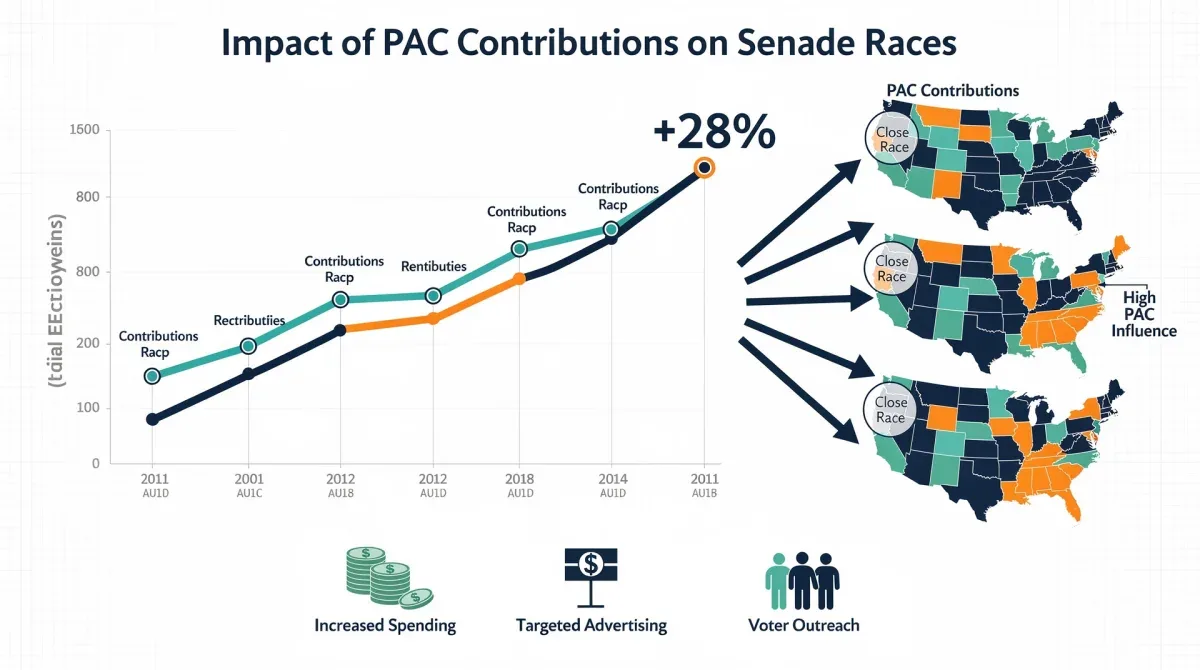
Federal PAC campaign contributions have surged by 28%, significantly influencing Senate races across the United States and reshaping the dynamics of political competition and electoral outcomes.
The landscape of American politics is constantly evolving, with financial contributions playing an increasingly pivotal role in shaping election outcomes. A recent analysis reveals a staggering PAC spending surge, marking a 28% increase in federal campaign contributions. This significant jump has profound implications, particularly for the highly contested Senate races across the nation.
Understanding the PAC Spending Surge
Political Action Committees, or PACs, are a cornerstone of American campaign finance, channeling donations from various groups to political candidates. The recent 28% increase in federal campaign contributions from these entities represents a substantial shift, indicating a heightened level of engagement and investment in the electoral process. This surge isn't just a number; it reflects strategic decisions by organizations aiming to influence policy and legislative outcomes.
The mechanics behind this increase are multi-faceted, involving both established corporate and labor PACs, as well as an emergent class of 'super PACs' that can raise and spend unlimited amounts of money. These groups often align with specific ideological viewpoints or industry interests, seeking to elect candidates who champion their causes. The rise in contributions suggests a more aggressive approach to securing political leverage in an increasingly polarized environment.
Key Drivers of Increased PAC Contributions
Several factors contribute to the escalating financial involvement of PACs in federal elections. Economic policy debates, social issues, and even global events can galvanize these groups to invest more heavily in campaigns that align with their agendas. The anticipation of critical legislative battles often fuels this financial push.
- Intensified Policy Debates: Major legislative proposals and regulatory changes often prompt PACs to increase their contributions, aiming to support candidates who will advance or oppose these measures.
- Electoral Competitiveness: In closely contested races, every dollar can make a difference. PACs tend to pour more money into swing states and competitive districts where their contributions can have a decisive impact.
- Strategic Investment: Organizations view campaign contributions as an investment in their future interests, supporting candidates who are likely to be influential in government.
- Grassroots Mobilization: While often associated with large donors, many PACs also represent grassroots movements, aggregating smaller contributions to amplify their collective voice.
Ultimately, the surge in PAC spending underscores a growing recognition among various organizations of the direct link between political outcomes and their operational or ideological goals. This financial influx fundamentally alters the dynamics of campaign strategy, media outreach, and voter engagement, requiring candidates to adapt their fundraising and messaging approaches.
Direct Impact on Senate Races
The ripple effect of this 28% increase in PAC contributions is most acutely felt in Senate races, where the stakes are particularly high. Control of the Senate can dictate the legislative agenda, judicial appointments, and the overall direction of national policy. As such, these races attract significant financial attention from PACs looking to secure or shift the balance of power.
Candidates in competitive Senate contests often rely heavily on PAC money to fund their extensive campaigns, which include advertising, grassroots organizing, and staffing. This influx of funds allows them to reach a broader electorate, articulate their platforms more effectively, and counter opponents' narratives. However, it also raises questions about the influence of special interests and the potential for wealthy donors to overshadow the voices of average citizens.
Funding Campaign Infrastructure and Messaging
PAC contributions are not merely deposited into a candidate's general fund; they are strategically allocated to various aspects of a campaign. Understanding where this money goes provides insight into how elections are won and lost.
- Media Advertising: A significant portion of PAC money goes towards television, radio, and digital advertisements, which are crucial for shaping public opinion and defining candidate images.
- Field Operations: Funds are used to support ground game efforts, including voter registration drives, get-out-the-vote initiatives, and volunteer coordination, essential for mobilizing supporters.
- Data Analytics and Polling: Sophisticated data analysis and polling help campaigns understand voter sentiment, identify key demographics, and tailor their messages for maximum impact.
- Staffing and Consultants: Running a modern campaign requires a large team of professionals, from campaign managers to communications experts and policy advisors, all funded by campaign contributions.
The competitive nature of Senate races means that candidates who can leverage substantial PAC support often gain a significant advantage in these critical areas. This financial backing can create a virtuous cycle, where early contributions attract more support, leading to greater visibility and a stronger campaign machine. The direct impact is a more professionalized and expensive political contest.

The Role of Super PACs and Dark Money
Beyond traditional PACs, the rise of Super PACs and the phenomenon of 'dark money' have further complicated the landscape of federal campaign finance. Super PACs, officially known as Independent-Expenditure Only Committees, can raise and spend unlimited amounts of money to overtly advocate for or against political candidates. Unlike traditional PACs, they cannot coordinate directly with campaigns, but their independent expenditures can be incredibly influential.
Dark money refers to funds spent by non-profit organizations that do not have to disclose their donors. These groups, often organized under sections 501(c)(4) or 527 of the tax code, can spend heavily on political advertising and issue advocacy, blurring the lines between political speech and direct campaign support. The lack of transparency surrounding dark money makes it difficult to trace the ultimate source of influence in elections, raising concerns about accountability and undue influence.
Transparency and Accountability Concerns
The increasing prominence of Super PACs and dark money groups has sparked considerable debate about the need for greater transparency in campaign finance. Critics argue that the ability to spend unlimited, undisclosed funds undermines the integrity of the electoral process and allows powerful interests to operate in the shadows.
The absence of donor disclosure for dark money groups makes it challenging for the public to understand who is attempting to influence elections and why. This can erode public trust in the political system and make it harder for voters to make informed decisions. Efforts to reform campaign finance laws often focus on increasing transparency and reining in the influence of these opaque funding sources.
The involvement of Super PACs and dark money significantly amplifies the impact of the overall PAC spending surge. These entities contribute to an environment where financial firepower can often dictate the narrative and reach of a campaign, making it even more challenging for candidates with limited resources to compete effectively.
Regional Disparities in PAC Spending
While the 28% surge in PAC contributions is a national trend, its impact is not uniformly distributed across all Senate races. Significant regional disparities exist, with certain states and electoral battlegrounds attracting a disproportionate share of PAC funding. These disparities often reflect the strategic importance of particular races in determining the balance of power in the Senate or the perceived vulnerability of incumbent senators.
States with highly competitive races, open seats, or incumbents facing strong challenges typically become magnets for PAC money. These 'swing states' are seen as crucial investments by political groups, as their outcomes can tip the scales in favor of one party or another. This concentration of funds can lead to an uneven playing field, where campaigns in less competitive states receive comparatively less financial attention.
Why Some States Attract More PAC Money
Several factors contribute to why certain regions become hotbeds for PAC spending, reflecting a calculated approach to maximizing electoral impact.
- Swing State Status: States that consistently have close elections and can vote either Republican or Democrat are prime targets for PAC investment, as they offer the highest return on investment in terms of influencing overall Senate control.
- Open Seats: When an incumbent senator retires, the resulting open seat often leads to highly contested primaries and general elections, attracting substantial PAC funding as both parties vie for control.
- Incumbent Vulnerability: Senators perceived as vulnerable, either due to shifting demographics or declining approval ratings, become targets for opposing PACs and recipients of increased support from allied PACs.
- National Significance: Some states hold symbolic or strategic importance beyond their electoral votes, influencing national narratives or future political trends, thus drawing more PAC attention.
These regional differences highlight how PAC spending is a highly strategic endeavor, concentrating resources where they are believed to have the greatest impact. The result is often an intensification of political competition in these key areas, with a deluge of advertising and campaign activities that can both inform and overwhelm voters.
Implications for Electoral Integrity and Voter Trust
The substantial increase in PAC contributions, particularly the 28% surge, raises important questions about the integrity of the electoral process and the public's trust in democratic institutions. When vast sums of money flow into campaigns, especially from sources that may not always be transparent, concerns about undue influence and the fairness of elections inevitably arise.
Voters may perceive that their voices are being drowned out by well-funded special interests, leading to cynicism and disengagement. This can undermine the fundamental principle of 'one person, one vote,' suggesting that financial power can exert disproportionate sway over political outcomes. Addressing these concerns is crucial for maintaining a healthy and robust democracy.
The Debate Over Campaign Finance Reform
The ongoing debate over campaign finance reform is directly linked to the public's perception of electoral integrity. Advocates for reform argue that stricter regulations are needed to limit the influence of money in politics and ensure a more level playing field for all candidates.
- Disclosure Requirements: Many reforms focus on increasing transparency, requiring all political spending, including dark money, to disclose its donors.
- Contribution Limits: Proposals often include lowering or capping the amounts individuals and organizations can contribute to campaigns and political parties.
- Public Financing: Some reform models advocate for public financing of elections, where government funds would match small-dollar donations, reducing reliance on large private contributions.
- Independent Oversight: Strengthening regulatory bodies like the Federal Election Commission (FEC) is often proposed to better enforce existing laws and investigate violations.
The conversation around campaign finance reform is complex, balancing First Amendment rights of free speech with the need to prevent corruption and ensure fair elections. The PAC spending surge adds urgency to this discussion, as the scale of financial influence continues to grow, prompting renewed calls for systemic changes to protect the democratic process.
Future Trends and What to Expect
Looking ahead, the trajectory of PAC spending suggests that federal campaign contributions will likely continue to climb, fueled by an increasingly competitive political environment and the evolving nature of campaign technology. The 28% surge is not an isolated event but rather indicative of broader trends that are reshaping how elections are financed and contested.
Technological advancements, particularly in digital advertising and micro-targeting, enable PACs to deploy their funds with greater precision and efficiency. This means that future campaigns will likely see even more sophisticated uses of data and digital platforms, requiring even larger budgets to compete effectively. Candidates will need to adapt to these changes, finding innovative ways to engage voters and secure funding.
Adapting to the New Financial Landscape
As the financial landscape of federal elections evolves, candidates, political parties, and voters must all adapt to new realities. Understanding these trends is crucial for navigating the complexities of modern politics.
- Digital Fundraising: Campaigns are increasingly leveraging digital platforms for fundraising, reaching a broader base of small-dollar donors to supplement PAC contributions.
- Strategic Partnerships: Candidates often form strategic partnerships with allied PACs and advocacy groups to maximize their reach and amplify their messages.
- Voter Education: Empowering voters with information about campaign finance and the sources of political funding becomes even more critical in an era of high spending.
- Policy Advocacy: Beyond electoral support, PACs are also heavily involved in policy advocacy, influencing legislative debates directly through lobbying and public relations campaigns.
The ongoing increase in PAC spending underscores the need for continuous vigilance and adaptation. While it presents challenges for electoral integrity, it also highlights the dynamic nature of American democracy, where financial resources play a significant, albeit controversial, role in shaping political outcomes and influencing policy decisions. The future of Senate races will undoubtedly be intertwined with these financial flows.

| Key Aspect | Brief Description |
|---|---|
| PAC Spending Surge | Federal campaign contributions from PACs have increased by 28%, indicating heightened political investment. |
| Senate Race Impact | The surge directly affects Senate races, funding advertising, field operations, and strategic messaging. |
| Super PACs & Dark Money | Unlimited spending by Super PACs and undisclosed dark money sources amplify influence and raise transparency concerns. |
| Electoral Integrity | Increased spending sparks debates on electoral fairness, voter trust, and the need for campaign finance reform. |
Frequently Asked Questions About PAC Spending
What is a PAC and how does it differ from a Super PAC?▼A PAC (Political Action Committee) is an organization that pools campaign contributions from members and donates those funds to campaigns for or against candidates, ballot initiatives, or legislation. Super PACs, officially Independent-Expenditure Only Committees, can raise and spend unlimited amounts of money to overtly advocate for or against political candidates but cannot coordinate directly with campaigns.
Why is there a 28% surge in federal campaign contributions from PACs?▼The 28% surge is driven by several factors, including intensified policy debates, increased electoral competitiveness in key races, and strategic investments by organizations aiming to influence legislative outcomes. Economic and social issues often motivate groups to invest more heavily in supporting aligned candidates.
How does PAC spending directly impact Senate races?▼PAC spending directly impacts Senate races by funding critical campaign infrastructure such as media advertising, grassroots field operations, data analytics, and professional staffing. This financial support enables candidates to reach a broader electorate, articulate their platforms, and counter opponents' messages more effectively, gaining a competitive edge.
What are the concerns associated with 'dark money' in federal elections?▼Dark money refers to funds spent by non-profit organizations that do not disclose their donors, making it difficult to trace the ultimate source of influence. Concerns include a lack of transparency, potential for undue influence by undisclosed special interests, and erosion of public trust in the electoral process, as voters cannot see who is trying to sway their decisions.
What are some proposed solutions for campaign finance reform?▼Proposed solutions for campaign finance reform often include increasing disclosure requirements for all political spending, implementing stricter contribution limits for individuals and organizations, exploring public financing options for elections, and strengthening independent oversight bodies like the Federal Election Commission to enforce regulations more effectively and ensure electoral integrity.
Conclusion
The substantial 28% surge in federal PAC campaign contributions marks a critical development in American politics, profoundly impacting Senate races across the nation. This financial influx, driven by intense policy debates and electoral competitiveness, reshapes campaign strategies, amplifies candidate reach, and raises significant questions about the role of money in democracy. As Super PACs and dark money continue to grow in prominence, the need for transparency and robust campaign finance reform becomes ever more pressing. Understanding these dynamics is essential for voters and policymakers alike to navigate the complex landscape of modern elections and uphold the integrity of our democratic process.
