Next-Gen Cloud Gaming Platforms 2026: 120 FPS Without New Hardware
By 2026, next-gen cloud gaming platforms are poised to deliver 120 FPS experiences without requiring new hardware, fundamentally changing how players access and enjoy high-fidelity games across various devices.
The landscape of interactive entertainment is undergoing a profound transformation, with next-gen cloud gaming platforms emerging as a revolutionary force. Imagine diving into your favorite titles at a buttery-smooth 120 frames per second (FPS), all without the need for expensive, dedicated gaming hardware. This isn't a distant dream; it's the imminent reality of 2026, where leading services are pushing the boundaries of accessibility and performance.
The evolution of cloud gaming: from concept to reality
Cloud gaming, once a niche concept plagued by latency issues and limited bandwidth, has matured into a formidable contender in the gaming industry. The promise of playing high-end titles on virtually any screen, from smart TVs to smartphones, without costly upfront hardware investments, is finally being realized. This evolution is driven by significant advancements in network infrastructure, data compression algorithms, and server-side processing power, making the dream of truly seamless, high-performance gaming a tangible reality for millions.
Early iterations of cloud gaming faced considerable skepticism, primarily due to inconsistent performance and a noticeable input lag that detracted from the gaming experience. However, the continuous refinement of streaming technology, coupled with the widespread deployment of fiber optics and 5G networks, has drastically improved the responsiveness and visual fidelity of these services. Gamers are no longer forced to compromise on quality or fluidity, even when streaming graphically intensive titles.
Technological breakthroughs enabling 120 FPS
Achieving 120 FPS in cloud gaming is a monumental technical feat, demanding significant innovation across several fronts. It requires not only robust server infrastructure capable of rendering complex scenes at high frame rates but also extremely efficient encoding and decoding processes to transmit that data rapidly over the internet. The key lies in minimizing every millisecond of latency, from controller input to on-screen action.

- Advanced Encoding/Decoding: Next-gen codecs like AV1 are crucial, offering superior compression ratios without sacrificing visual quality, allowing more data to be packed into available bandwidth.
- Edge Computing: Distributing servers closer to end-users (edge computing) significantly reduces the physical distance data must travel, cutting down on round-trip times and improving responsiveness.
- Dynamic Bitrate Adjustment: Intelligent algorithms that adapt streaming quality in real-time based on network conditions ensure a stable and smooth experience, even during fluctuations.
The convergence of these technologies is what empowers cloud gaming platforms to deliver experiences that were once exclusive to high-end PCs and consoles. This opens up gaming to a broader audience, removing financial barriers and democratizing access to cutting-edge entertainment.
The journey from rudimentary cloud streaming to high-fidelity, low-latency 120 FPS gaming has been a testament to relentless technological innovation. As infrastructure continues to improve globally, the capabilities of these platforms will only expand, further blurring the lines between local and streamed gaming experiences. This ongoing evolution ensures that cloud gaming remains at the forefront of the entertainment industry, constantly pushing the boundaries of what's possible.
GeForce NOW: NVIDIA's powerhouse in the cloud
NVIDIA's GeForce NOW has long been a frontrunner in the cloud gaming space, distinguishing itself with its unique approach of allowing users to stream games they already own across various digital storefronts. By 2026, GeForce NOW is expected to solidify its position as a premier platform for high-performance cloud gaming, particularly for players seeking a 120 FPS experience without investing in new hardware. The service leverages NVIDIA's cutting-edge GPU technology in its data centers, ensuring that even the most demanding titles run flawlessly.
The core strength of GeForce NOW lies in its robust server architecture and proprietary streaming technology. NVIDIA has invested heavily in optimizing its data centers with the latest graphics cards, mirroring the performance of a high-end gaming PC. This means subscribers can access a vast library of PC games and play them with the graphical fidelity and frame rates typically associated with local hardware, but streamed directly to their devices.
Key features and performance in 2026
By 2026, GeForce NOW's capabilities will likely include enhanced ray tracing support and even more refined AI-driven upscaling technologies like DLSS, further boosting visual quality and performance. The service's commitment to delivering a consistent 120 FPS experience will be evident through upgraded server hardware and improved network protocols designed to minimize latency.
- Extensive Game Library: Access to a vast catalog of PC games from Steam, Epic Games Store, GOG, and more, allowing players to utilize their existing game purchases.
- High-Fidelity Graphics: Support for advanced graphical features such as ray tracing, making games look incredibly realistic even when streamed.
- Low Latency Streaming: Continuous optimization of streaming protocols and server locations to ensure minimal input lag, critical for competitive gaming.
- Broad Device Compatibility: Play across a wide array of devices, including PCs, Macs, Chromebooks, Android, iOS, and smart TVs, offering unparalleled flexibility.
GeForce NOW's tiered subscription model, which offers different levels of access to server performance and session length, allows users to choose a plan that best suits their gaming habits and budget. The highest tiers are specifically designed to deliver the premium 120 FPS experience, catering to enthusiasts who prioritize performance.
In essence, GeForce NOW in 2026 represents the pinnacle of cloud PC gaming, offering a seamless bridge between a player's existing game library and the power of NVIDIA's data centers. Its focus on performance, compatibility, and a bring-your-own-games model makes it a compelling choice for those looking to experience next-gen gaming without the hardware upgrade cycle.
Xbox Cloud Gaming: Microsoft's ecosystem expansion
Microsoft's Xbox Cloud Gaming (formerly xCloud) is a crucial component of its broader Xbox ecosystem, extending the reach of Xbox Game Pass Ultimate to an unprecedented number of devices. By 2026, Xbox Cloud Gaming is projected to be a dominant force, offering a seamless 120 FPS experience for a curated library of Xbox titles, all without the need for an Xbox console. This strategic move allows Microsoft to tap into a massive audience of gamers who may not own dedicated hardware but still desire access to high-quality gaming.
The integration with Xbox Game Pass Ultimate is a significant differentiator, providing subscribers with instant access to hundreds of games, including first-party Xbox titles on day one. This value proposition is immense, transforming a subscription service into a gateway for next-gen gaming experiences across a multitude of screens, from mobile phones to web browsers.
Advancements in performance and library in 2026
By 2026, Xbox Cloud Gaming will likely have fully transitioned its server blades to Xbox Series X hardware, enabling native 120 FPS streaming for compatible titles. Further enhancements in Microsoft's Azure cloud infrastructure will ensure robust performance and widespread availability, making the service a truly global offering.
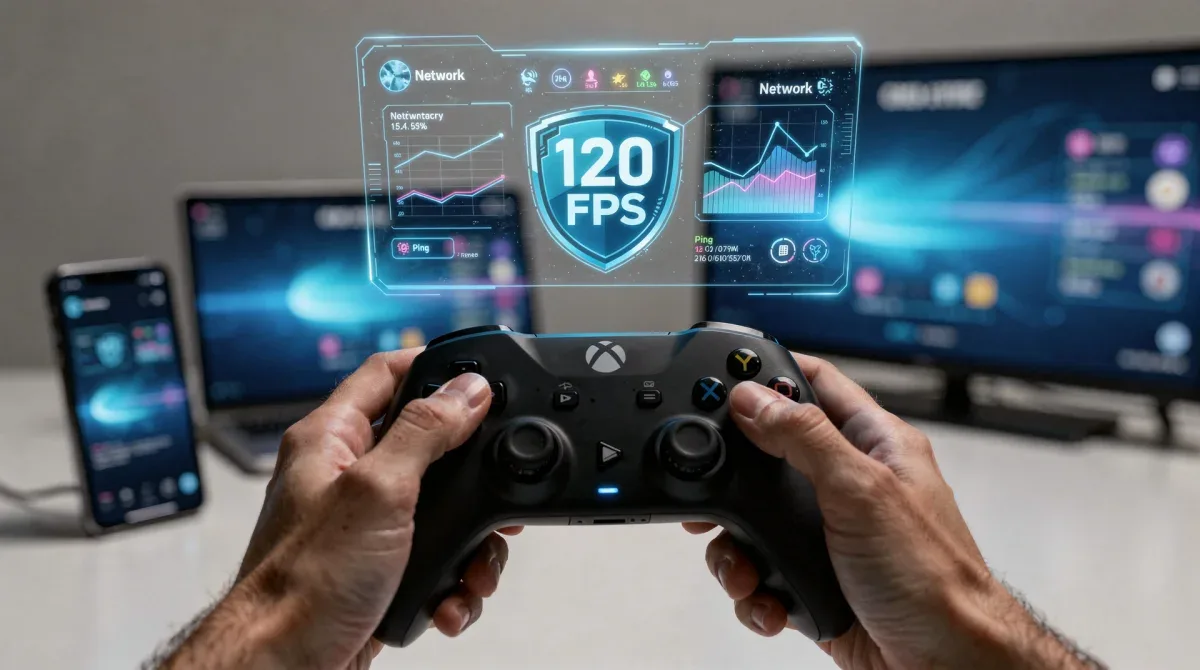
- Deep Game Pass Integration: Seamless access to a constantly evolving library of hundreds of high-quality games, including new releases and Xbox exclusives.
- Xbox Series X Power: Leveraging the raw processing power of Xbox Series X consoles in the cloud to deliver stunning graphics and smooth gameplay.
- Multi-Device Play: Play on Android, iOS, Windows PCs, and smart TVs, with support for various controllers and touch controls on mobile.
- Social Features: Integration with Xbox Live, allowing players to connect with friends, earn achievements, and participate in multiplayer sessions from the cloud.
Microsoft's commitment to cloud gaming is further demonstrated by its continuous investment in server infrastructure and network optimization. The company aims to make Xbox Cloud Gaming an indispensable part of the gaming experience, offering flexibility and accessibility without compromising on the quality that Xbox players expect.
Xbox Cloud Gaming in 2026 will serve as a powerful extension of the Xbox brand, bringing high-fidelity gaming to a broader audience than ever before. Its strong ties to Game Pass Ultimate and the formidable power of Xbox Series X hardware in the cloud position it as a formidable competitor in the next-gen cloud gaming arena, making premium gaming accessible to everyone, everywhere.
Emerging platforms and innovative challengers
While NVIDIA and Microsoft lead the charge, the cloud gaming landscape is dynamic, with several other platforms and innovative challengers vying for market share. These emerging services often bring unique features, business models, or technological approaches that could disrupt the established order. By 2026, we can expect to see increased specialization and diversification within the cloud gaming market, catering to different segments of gamers.
Some challengers might focus on specific genres, offer niche libraries, or experiment with novel subscription structures. The competition is fierce, driving innovation across the board, which ultimately benefits the consumer through improved services and more choices. These platforms are pushing the boundaries of what's possible, from integrating with new hardware form factors to exploring decentralized cloud gaming solutions.
Potential disruptors and their strategies
Several smaller players and tech giants are exploring cloud gaming, each with their own unique strategies to attract users. These could range from telecommunication companies leveraging their network infrastructure to startups focusing on specific regional markets or game types. The common goal, however, remains to deliver a high-quality, low-latency gaming experience.
- Amazon Luna: Leveraging Amazon's vast AWS infrastructure, Luna offers a channel-based subscription model and deep integration with Twitch, appealing to streamers and their audiences.
- Boosteroid: Known for its competitive pricing and a strong focus on European markets, Boosteroid offers a similar 'bring your own games' model to GeForce NOW, with growing support for high refresh rates.
- Google (with potential re-entry or new strategy): Although Stadia ceased operations, Google possesses immense cloud infrastructure and AI capabilities. A potential re-entry or partnership could leverage these strengths for a new, more robust cloud gaming offering.
These platforms are constantly innovating, from optimizing their streaming algorithms to expanding their server footprints. The increasing demand for flexible, accessible gaming is creating fertile ground for new entrants and existing players to refine their offerings and carve out their own niches in the market. The ultimate success of these challengers will depend on their ability to consistently deliver on the promise of high-performance cloud gaming.
The presence of emerging platforms and innovative challengers ensures a healthy competitive environment within the cloud gaming sector. Their diverse approaches and continuous development contribute to the overall advancement of the technology, pushing all providers to deliver better, more accessible, and higher-performing gaming experiences for players worldwide.
Comparing 120 FPS delivery and latency management
Delivering a consistent 120 FPS experience in cloud gaming is not merely about raw server power; it's a complex interplay of network architecture, encoding efficiency, and sophisticated latency management. The leading platforms in 2026 will differentiate themselves not just by claiming 120 FPS, but by how reliably and imperceptibly they achieve it, minimizing any perceived lag between player input and on-screen action. This is the holy grail of cloud gaming, especially for competitive titles where every millisecond counts.
Latency, the bane of early cloud gaming, refers to the delay between an action performed by the player (e.g., pressing a button) and that action being reflected in the game. In a cloud gaming setup, this involves several stages: input capture, transmission to the server, game processing, video encoding, transmission back to the client, and video decoding/display. Each stage introduces a small delay, and collectively, these can become noticeable.
Strategies for ultra-low latency streaming
To achieve the elusive ultra-low latency required for 120 FPS gaming, platforms employ a variety of advanced techniques. These strategies are continuously refined, leveraging breakthroughs in networking, compression, and predictive algorithms. The goal is to make the streamed experience feel indistinguishable from playing on local hardware.
- Network Optimization: Utilizing dedicated network paths, prioritizing gaming traffic, and establishing direct peering agreements with ISPs to reduce transit times.
- Predictive Rendering: Employing AI to predict player movements and render frames slightly ahead of time, effectively masking network delays.
- Adaptive Sync Technologies: Integrating technologies similar to NVIDIA G-Sync or AMD FreeSync to synchronize the display refresh rate with the incoming streamed frames, reducing tearing and stutter.
- Global Server Infrastructure: Deploying data centers strategically around the world to ensure that players are always connected to the nearest possible server, minimizing geographical latency.
The relentless pursuit of lower latency and higher frame rates is what defines the next generation of cloud gaming. Platforms that excel in these areas will be the ones that truly capture the hearts of serious gamers, proving that the cloud can indeed offer a premium, uncompromised gaming experience.
Ultimately, the comparison of 120 FPS delivery among these platforms boils down to their ability to manage and mitigate latency effectively. While raw frame rates are important, a truly superior cloud gaming experience is one where the technology fades into the background, allowing players to immerse themselves fully in their games without any noticeable delays or visual hiccups.
The impact of 120 FPS cloud gaming on the industry
The widespread availability of 120 FPS cloud gaming without new hardware in 2026 marks a pivotal moment for the entire gaming industry. This technological leap has far-reaching implications, from how games are developed and distributed to how consumers engage with interactive entertainment. It represents a significant democratization of high-fidelity gaming, potentially reshaping market dynamics and fostering new creative opportunities.
One of the most immediate impacts is the lowering of the barrier to entry for high-end gaming. No longer will expensive consoles or powerful PCs be prerequisites for experiencing the latest titles at their peak performance. This opens up a vast new market of casual gamers, budget-conscious consumers, and individuals in regions where traditional gaming hardware is prohibitively expensive or difficult to acquire.
Shifting paradigms in game development and accessibility
Game developers will increasingly design titles with cloud streaming in mind, optimizing for network conditions and diverse client devices. This could lead to more scalable game architectures and a greater focus on cross-platform play. The accessibility benefits are profound, allowing individuals with physical disabilities to potentially access complex games more easily through simplified input methods or specialized interfaces offered by cloud platforms.
- Broader Market Reach: Games become accessible to anyone with an internet connection and a compatible screen, expanding the global gamer base significantly.
- Reduced Hardware Obsolescence: Consumers no longer need to upgrade hardware frequently to keep up with new game requirements, leading to cost savings and reduced electronic waste.
- New Monetization Models: Cloud platforms may inspire innovative subscription tiers, micro-transactions tied to cloud-specific features, or even advertising-supported gaming.
- Enhanced Collaboration: Developers can more easily test and distribute builds across diverse hardware, streamlining development cycles and fostering remote collaboration.
The shift towards cloud-centric gaming also has environmental implications, as centralized data centers can be optimized for energy efficiency in ways individual gaming setups often cannot. This consolidation of computing power could contribute to a more sustainable gaming ecosystem in the long run.
The impact of 120 FPS cloud gaming extends beyond mere technical specifications; it represents a fundamental shift in how we conceive of and interact with video games. By making high-performance gaming universally accessible, it paves the way for unprecedented growth, innovation, and inclusivity within the entertainment industry, promising a future where the joy of gaming is truly for everyone.
Future outlook: beyond 2026 for cloud gaming
As we look beyond 2026, the trajectory for cloud gaming is one of continuous advancement and integration into our daily lives. The foundational work being laid by platforms delivering 120 FPS without new hardware will serve as a springboard for even more immersive and ubiquitous experiences. The future promises innovations that will further blur the lines between virtual and physical realities, making gaming an even more integral part of the digital landscape.
Expect to see cloud gaming services becoming deeply embedded into smart home ecosystems, automotive entertainment systems, and even wearable technology. The concept of a dedicated gaming device might become increasingly antiquated as the cloud seamlessly delivers high-fidelity content to every screen imaginable. This pervasive availability will unlock new forms of interactive entertainment and social engagement.
Innovations on the horizon
The pace of technological development suggests several exciting innovations are on the horizon for cloud gaming. These advancements will likely focus on enhancing immersion, expanding accessibility, and integrating with emerging technologies to create truly next-level experiences.
- Holographic and AR/VR Integration: Cloud gaming could power high-fidelity augmented reality (AR) and virtual reality (VR) experiences, offloading intensive rendering to the cloud and enabling lighter, more comfortable headsets.
- AI-Driven Personalization: Advanced AI could personalize game experiences on the fly, tailoring difficulty, narrative, or even visual styles based on individual player preferences and performance.
- Decentralized Cloud Gaming: Exploring blockchain or peer-to-peer networks to distribute computing power, potentially leading to even lower latency and more resilient services.
- Interactive Media Convergence: Cloud gaming platforms could merge more closely with streaming video services, allowing for interactive storytelling experiences that blend traditional media with gaming.
The ongoing development of 6G networks and beyond will further enhance bandwidth and reduce latency to near-zero levels, unlocking possibilities that are currently unimaginable. This will enable truly instantaneous interactions and hyper-realistic graphics, making cloud gaming an even more compelling proposition.
The future of cloud gaming beyond 2026 is bright and filled with potential. The current focus on delivering 120 FPS without new hardware is just the beginning of a journey towards a completely seamless, universally accessible, and deeply immersive gaming experience. The ongoing innovation promises to redefine what it means to play, connecting players to worlds and each other in unprecedented ways.
| Key Platform | 2026 Advantage |
|---|---|
| GeForce NOW | Leverages NVIDIA's powerful GPUs for 120 FPS, supports owned PC games across many storefronts. |
| Xbox Cloud Gaming | Integrated with Xbox Game Pass Ultimate, offering 120 FPS from Xbox Series X hardware in the cloud. |
| Emerging Challengers | Innovative approaches, niche markets, and diverse business models driving competition and specialized offerings. |
| 120 FPS Delivery | Achieved through advanced encoding, edge computing, and sophisticated latency management techniques. |
Frequently asked questions about next-gen cloud gaming
What exactly is 120 FPS cloud gaming and why is it important?▼120 FPS cloud gaming refers to streaming games at 120 frames per second directly to your device from remote servers. This higher frame rate provides incredibly smooth and responsive visuals, which is crucial for fast-paced action games and competitive multiplayer, significantly enhancing the overall gaming experience without needing powerful local hardware.
Do I need special internet speeds for 120 FPS cloud gaming?▼Yes, while exact requirements vary by platform, achieving a stable 120 FPS experience typically demands a robust and consistent internet connection, often a minimum of 50-100 Mbps, with low latency. Fiber optic or high-speed cable connections are ideal to minimize input lag and ensure smooth streaming.
Which devices will support 120 FPS cloud gaming by 2026?▼By 2026, most major cloud gaming platforms will support 120 FPS streaming across a wide range of devices, including modern smart TVs, PCs, Macs, Chromebooks, and high-end smartphones and tablets. The key is that the display device itself must support a 120Hz refresh rate to fully utilize the higher frame rate.
Will cloud gaming replace traditional consoles and PCs?▼While cloud gaming significantly expands accessibility, it's unlikely to fully replace traditional consoles and PCs by 2026. Instead, it will coexist as a powerful alternative, catering to users who prioritize convenience, cost-effectiveness, and multi-device flexibility. Dedicated hardware will still appeal to enthusiasts seeking ultimate control and offline play.
How do cloud gaming platforms minimize latency for 120 FPS?▼Platforms minimize latency through several techniques: deploying servers closer to users (edge computing), using advanced video compression codecs (like AV1), optimizing network routes, and employing predictive algorithms. These combined efforts reduce the delay between player input and on-screen response, making 120 FPS streaming feel more immediate.
Conclusion
The year 2026 stands as a landmark for the gaming industry, ushering in an era where next-gen cloud gaming platforms reliably deliver 120 FPS experiences without requiring new, expensive hardware. Services like NVIDIA's GeForce NOW and Microsoft's Xbox Cloud Gaming are at the forefront of this revolution, democratizing access to high-fidelity, low-latency gaming across an ever-expanding array of devices. This transformative shift not only redefines player engagement but also reshapes game development, market dynamics, and the very concept of gaming accessibility. As technology continues its relentless march forward, the future promises even more immersive and seamless cloud-powered entertainment, ensuring that the joy of cutting-edge gaming is truly within everyone's reach.
