DOT's National EV Network Phase 2: 500,000 Chargers
The Department of Transportation rolls out Phase 2 of the National EV Network, setting an ambitious target of 500,000 public charging stations to accelerate electric vehicle adoption and transform America's transportation landscape.
The announcement from the Department of Transportation marks a pivotal moment for electric vehicle adoption in the United States, as it officially rolls out Phase 2 of the National EV Network with 500,000 public chargers. This ambitious initiative is poised to dramatically reshape the nation's charging infrastructure, making electric vehicle ownership more accessible and convenient for millions of Americans.
Understanding Phase 2: The Vision for a Connected Nation
Phase 2 of the National EV Network represents a significant acceleration in the federal government's commitment to electric mobility. Building on the foundational work of Phase 1, this new phase aims to deploy an unprecedented number of charging stations, ensuring that EV drivers can travel confidently across the country without range anxiety. The vision is clear: a seamless, interconnected network that supports both daily commutes and long-distance journeys.
This expansion isn't merely about quantity; it's also about strategic placement and technological advancement. The Department of Transportation (DOT) is emphasizing the need for high-speed charging options, particularly along major highway corridors and in underserved communities. This dual focus ensures both widespread availability and efficient charging experiences for all EV users.
Strategic Deployment and Geographic Focus
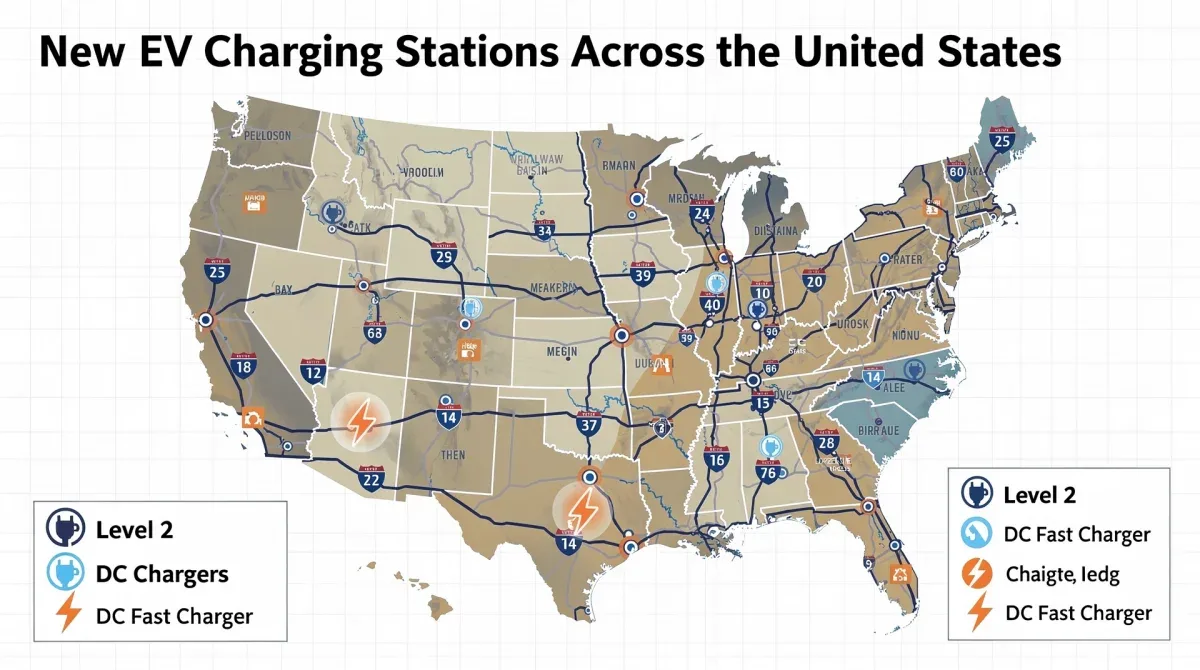
The DOT's strategy for Phase 2 involves a meticulous analysis of current and future EV adoption trends, population density, and existing infrastructure gaps. States are collaborating closely with federal agencies to identify optimal locations for new charging stations, prioritizing areas that will maximize utility and impact.
- Major interstate highways are primary targets for fast-charging hubs.
- Rural areas and communities lacking sufficient charging options are receiving targeted investment.
- Urban centers will see an increase in Level 2 chargers to support daily commuting needs.
- Public-private partnerships are crucial for accelerating deployment and innovation.

The deployment plan is designed to create a resilient and redundant network, minimizing reliance on single points of failure and ensuring continuous service. This thoughtful approach aims to build a charging infrastructure that can adapt to future technological advancements and growing demand.
In conclusion, Phase 2 is more than just adding chargers; it's about systematically building a robust, accessible, and future-proof electric vehicle charging ecosystem that will serve as the backbone for America's transition to sustainable transportation. The strategic deployment ensures that the network is not only expansive but also highly effective in meeting the diverse needs of EV drivers nationwide.
Technological Advancements Driving the Expansion
The success of the National EV Network's Phase 2 hinges significantly on embracing and integrating cutting-edge charging technologies. This includes not only increasing the number of stations but also enhancing their speed, reliability, and user-friendliness. The DOT is actively encouraging the adoption of advanced charging solutions that can meet the demands of a rapidly evolving EV market.
Innovations in battery technology and vehicle design necessitate a corresponding evolution in charging infrastructure. High-power DC fast chargers (DCFC) capable of delivering hundreds of kilowatts are becoming the standard for rapid charging, drastically reducing wait times. Furthermore, smart charging systems are being implemented to optimize energy distribution and reduce strain on the electrical grid.
Next-Generation Charging Solutions
The focus on advanced technology extends to the types of chargers being installed. While Level 2 chargers remain important for overnight or workplace charging, DCFCs are critical for long-distance travel and quick top-ups. The network will see a significant increase in these high-speed options.
- Ultra-fast DCFCs: Capable of adding hundreds of miles of range in minutes.
- Vehicle-to-Grid (V2G) capabilities: Exploring how EVs can feed power back to the grid during peak demand.
- Wireless charging: Pilot programs for inductive charging at specific locations.
- Smart grid integration: Using AI and data analytics to manage charging loads efficiently.
These technological advancements are not just about speed; they also encompass greater reliability and interoperability. The DOT is working to ensure that charging stations are compatible with a wide range of EV models and that payment systems are streamlined and universally accepted, enhancing the overall user experience.
Ultimately, the technological backbone of Phase 2 is designed to make EV charging as convenient and efficient as possible, removing one of the primary barriers to widespread electric vehicle adoption. By investing in state-of-the-art solutions, the network aims to stay ahead of the curve in a fast-paced industry.
Economic Impact and Job Creation
The rollout of Phase 2 of the National EV Network is expected to generate substantial economic benefits across the United States. Beyond the immediate environmental advantages, this massive infrastructure project will stimulate economic growth, create thousands of jobs, and foster innovation within the clean energy sector. The investment in charging infrastructure is a direct investment in America's economic future.
From manufacturing charging equipment to installing and maintaining the stations, the entire supply chain stands to benefit. This initiative will not only create highly skilled jobs in engineering and technology but also provide opportunities for electricians, construction workers, and service technicians. The ripple effect will extend to local businesses and communities located near new charging hubs.
New Opportunities Across Industries
The economic impact of the EV charging expansion is multi-faceted, touching various sectors and creating a diverse range of employment opportunities. The demand for raw materials, components, and finished products related to EV infrastructure will boost domestic manufacturing.
- Manufacturing: Increased production of charging stations, batteries, and related components.
- Construction: Significant demand for skilled labor to install new charging infrastructure.
- Software Development: Creation of management systems, payment platforms, and user interfaces for the network.
- Maintenance and Operations: Ongoing jobs for servicing and managing the vast network of chargers.
Furthermore, the increased adoption of EVs, driven by improved charging access, will also boost the automotive industry, particularly manufacturers focused on electric models. This creates a virtuous cycle where infrastructure investment supports vehicle sales, which in turn justifies further infrastructure development.
In essence, Phase 2 is not just an environmental policy; it's a powerful economic stimulus package. It's designed to create a sustainable industry that provides well-paying jobs and fosters long-term prosperity, aligning environmental goals with economic growth for the nation.
Addressing Challenges and Ensuring Equity
While the ambition behind Phase 2 of the National EV Network is commendable, its implementation comes with a unique set of challenges that the Department of Transportation is actively working to address. These challenges range from grid capacity and utility coordination to ensuring equitable access for all communities, regardless of socio-economic status or geographic location. Overcoming these hurdles is crucial for the long-term success and fairness of the network.
One of the primary concerns is the strain on the existing electrical grid. A massive influx of EV charging demand requires significant upgrades to local and regional power infrastructure. The DOT is collaborating with utility companies to plan and execute these upgrades efficiently, often incorporating smart grid technologies and renewable energy sources to mitigate potential issues.
Ensuring Fair and Widespread Access
Equity is a cornerstone of the Phase 2 rollout. The DOT recognizes the importance of preventing a 'charging desert' scenario where certain communities are left behind. Efforts are being made to ensure that charging stations are accessible in rural areas, low-income neighborhoods, and communities of color, which have historically been underserved by infrastructure projects.
- Community engagement: Prioritizing input from local leaders and residents in planning.
- Incentives for underserved areas: Offering grants and funding to deploy chargers in challenging locations.
- Accessibility standards: Ensuring all new stations meet ADA compliance and are user-friendly for diverse populations.
- Public awareness campaigns: Educating all communities about EV benefits and charging availability.
Furthermore, the DOT is addressing the challenge of interoperability and standardization. Ensuring that all charging stations are compatible with various EV models and that payment methods are simple and universally accepted will be vital for a seamless user experience. This includes working with industry stakeholders to establish common protocols and best practices.
In summary, while the path to 500,000 public chargers is not without obstacles, the DOT's comprehensive approach, which includes proactive planning, utility collaboration, and a strong focus on equity, aims to build a network that is robust, reliable, and accessible to every American. This commitment to overcoming challenges will define the true success of Phase 2.
The Role of Public-Private Partnerships
The scale and complexity of deploying 500,000 public chargers necessitate a collaborative approach, with public-private partnerships playing a critical role in the success of Phase 2 of the National EV Network. The Department of Transportation is actively fostering these collaborations, recognizing that combining federal resources with private sector innovation and efficiency is the fastest and most effective way to achieve its ambitious goals.
Private companies bring invaluable expertise in technology development, manufacturing, installation, and ongoing maintenance of charging infrastructure. Their agility and market-driven insights can accelerate deployment, introduce cutting-edge solutions, and optimize operational efficiencies. Federal funding and regulatory support, in turn, provide the necessary framework and financial incentives to de-risk investments for private entities.
Synergies for Accelerated Deployment
These partnerships are structured to leverage the strengths of both sectors. Government agencies provide the overarching vision, strategic planning, and significant funding, while private companies execute the deployment, manage operations, and drive technological innovation.
- Shared investment: Federal grants and tax incentives attract private capital for infrastructure projects.
- Technical expertise: Private firms offer specialized knowledge in charging technology and network management.
- Streamlined processes: Collaboration can reduce bureaucratic hurdles and accelerate project timelines.
- Scalability: Private sector capacity is essential for scaling up deployment to meet the 500,000-charger target.
Moreover, public-private partnerships can foster a competitive environment, encouraging innovation and ensuring that the network remains at the forefront of charging technology. This includes developing new business models for charging services and exploring innovative ways to integrate renewable energy sources into the network.
Ultimately, the synergy created by these partnerships is indispensable for realizing the full potential of Phase 2. By working together, the public and private sectors can build a charging infrastructure that is not only extensive but also highly efficient, resilient, and responsive to the evolving needs of EV drivers across the nation.
Looking Ahead: The Future of EV Mobility in the U.S.
The successful rollout of Phase 2 of the National EV Network with its 500,000 public chargers is more than just an infrastructure project; it's a foundational step towards a transformative future for mobility in the United States. This expansion will not only accelerate the adoption of electric vehicles but also catalyze broader changes in urban planning, energy consumption, and environmental sustainability. The long-term implications are profound, setting the stage for a cleaner, more efficient transportation ecosystem.
As the charging infrastructure matures, we can anticipate a significant shift in consumer behavior. Range anxiety, a major deterrent for many potential EV buyers, will largely dissipate, making electric vehicles a more viable and attractive option for a wider demographic. This increased demand will, in turn, drive further innovation in vehicle technology and battery efficiency.
Long-Term Vision and Societal Impact
The future of EV mobility extends beyond simply replacing gasoline cars with electric ones. It encompasses a holistic transformation of how we think about transportation and energy.
- Reduced carbon emissions: A significant step towards meeting national climate goals.
- Improved air quality: Especially in urban areas, leading to better public health outcomes.
- Energy independence: Less reliance on fossil fuels and unstable global markets.
- Smart city integration: EV infrastructure becoming a core component of intelligent urban systems.
Furthermore, the data collected from this vast network of chargers will provide invaluable insights for future infrastructure planning, energy management, and policy development. This data-driven approach will ensure that the network continues to evolve and adapt to new challenges and opportunities, maintaining its relevance and effectiveness for decades to come.
In conclusion, Phase 2 is a bold declaration of intent, signaling America's unwavering commitment to a sustainable transportation future. The 500,000 public chargers will serve as critical enablers, paving the way for a cleaner environment, a stronger economy, and a more resilient nation for generations to come.
| Key Point | Brief Description |
|---|---|
| 500,000 Chargers Goal | DOT's ambitious target for public EV charging stations in Phase 2. |
| Strategic Deployment | Focus on highways, rural areas, and underserved communities for optimal placement. |
| Technological Advancements | Integration of ultra-fast DCFCs, smart grid, and V2G capabilities. |
| Public-Private Partnerships | Crucial collaborations for accelerated deployment and innovation. |
Frequently Asked Questions About the National EV Network
What is the primary goal of Phase 2 of the National EV Network?▼The primary goal of Phase 2 is to significantly expand the nation's electric vehicle charging infrastructure by deploying 500,000 public chargers. This aims to reduce range anxiety, accelerate EV adoption, and ensure convenient charging access across urban, rural, and highway areas throughout the United States.
How will the new charging stations be distributed?▼Charging stations will be strategically distributed, prioritizing major interstate highways for fast-charging hubs, and targeting rural areas and underserved communities to ensure equitable access. Urban centers will also see an increase in Level 2 chargers to support daily commuting and local travel needs.
What technologies are being emphasized in this expansion?▼Phase 2 emphasizes the deployment of advanced technologies, including ultra-fast DCFCs (Direct Current Fast Chargers) for rapid charging. There's also a focus on smart grid integration, Vehicle-to-Grid (V2G) capabilities, and ensuring interoperability across different EV models and payment systems for a seamless user experience.
What are the economic benefits of this infrastructure rollout?▼The rollout is expected to generate significant economic benefits, including job creation in manufacturing, construction, software development, and maintenance. It will also stimulate growth in the clean energy sector and the automotive industry, fostering innovation and long-term prosperity across various sectors.
How is the Department of Transportation addressing equity concerns?▼The DOT is committed to ensuring equitable access by prioritizing community engagement, offering incentives for deployment in underserved areas, and ensuring stations meet accessibility standards. The goal is to prevent 'charging deserts' and provide charging options for all communities, including rural and low-income neighborhoods.
Conclusion
The Department of Transportation's rollout of Phase 2 of the National EV Network with its ambitious target of 500,000 public chargers marks a transformative moment for the United States. This initiative is not merely about increasing the number of charging points; it represents a comprehensive strategy to build a robust, technologically advanced, and equitable infrastructure that will underpin the nation's transition to electric mobility. By addressing challenges through strategic planning, fostering public-private partnerships, and focusing on widespread access, the DOT is laying the groundwork for a future where electric vehicles are a convenient and accessible option for every American, driving environmental sustainability and economic growth for generations to come.
