DOL 2026 Overtime Regulations: $1.8B Corporate Compliance Costs
The Department of Labor's 2026 overtime regulations are projected to impose a substantial $1.8 billion in compliance costs on corporate employers, necessitating strategic adjustments to compensation and operational frameworks.
The impending Department of Labor 2026 Overtime Regulations are set to reshape the landscape for corporate employers across the United States, bringing with them a projected $1.8 billion in compliance costs. This significant financial burden demands immediate attention and proactive strategizing from businesses of all sizes, especially those with extensive non-exempt workforces.
Understanding the New DOL Overtime Regulations for 2026
The Department of Labor (DOL) periodically updates its regulations concerning overtime eligibility under the Fair Labor Standards Act (FLSA). The 2026 changes are particularly impactful, focusing on increasing the minimum salary threshold for executive, administrative, and professional (EAP) employees to qualify for overtime exemptions. This adjustment means that a significant number of employees previously considered exempt may now be eligible for overtime pay, fundamentally altering payroll structures and operational budgets for many corporations.
These revisions are not merely minor tweaks; they represent a substantial recalibration of who is considered a salaried, exempt employee versus an hourly, non-exempt worker. Businesses must thoroughly review their current classifications and compensation models to ensure they align with the new federal mandates. Failure to do so could result in costly litigation, back pay liabilities, and significant penalties, far exceeding the initial compliance investment.
Key Changes in the 2026 Overtime Rule
- Increased Salary Threshold: The most prominent change is the elevated minimum salary required for EAP exemptions, which will be updated using a clear indexing mechanism.
- Automatic Updates: Future adjustments to the salary threshold will occur automatically every three years, based on current wage data, ensuring the regulations remain relevant.
- Highly Compensated Employee (HCE) Threshold: The total annual compensation requirement for the HCE exemption will also see an increase, bringing more high-earning individuals under overtime protection.
The implications of these changes extend beyond simple payroll adjustments. They touch upon recruitment strategies, employee morale, and overall operational efficiency. Companies must engage in a comprehensive analysis of their workforce, identifying all roles that might be affected and planning for the necessary reclassifications or salary increases. Proactive communication with employees about these changes is also crucial to maintain transparency and trust within the organization.
Ultimately, understanding the nuances of the 2026 regulations is the first step toward effective compliance. Corporations that invest early in deciphering these rules and their specific impact on their operations will be better positioned to mitigate risks and adapt smoothly to the new environment. The goal is not just to comply, but to leverage these changes as an opportunity to optimize workforce management.
The $1.8 Billion Projected Compliance Costs: A Breakdown
The Department of Labor’s projection of $1.8 billion in compliance costs for corporate employers is a staggering figure that underscores the profound impact of the 2026 overtime regulations. This estimate encompasses a wide range of expenses, from direct payroll increases to administrative overhead and potential legal fees. Understanding where these costs originate is crucial for businesses to develop targeted mitigation strategies.
A significant portion of this cost stems from direct payroll adjustments. Companies will either need to increase the salaries of currently exempt employees who fall below the new threshold to maintain their exempt status or reclassify them as non-exempt, making them eligible for overtime pay. For many businesses, particularly those in sectors with traditionally lower salaries for managerial roles, this will mean a substantial hike in labor expenses. The decision between raising salaries and reclassifying roles will depend on various factors, including the number of affected employees, average overtime hours, and strategic workforce planning.
Categories of Compliance Expenses
- Direct Payroll Costs: This includes salary increases for employees to meet the new exemption threshold and overtime payments for reclassified employees.
- Administrative and HR Costs: Expenses related to reviewing job descriptions, reclassifying employees, updating payroll systems, and training HR staff and managers on new policies.
- Legal and Consulting Fees: Costs associated with seeking expert legal advice to ensure compliance, conducting internal audits, and potentially defending against non-compliance claims.
Beyond the direct financial outlay, there are also indirect costs to consider. These include potential impacts on employee morale if reclassifications are not handled sensitively, the time and resources diverted from other business initiatives to focus on compliance, and the risk of reputational damage from missteps. The $1.8 billion figure serves as a stark reminder that this is not a challenge to be underestimated. Corporations must approach this with a comprehensive understanding of all potential cost centers.
The compliance journey will require significant investment in both financial and human capital. Companies that fail to allocate sufficient resources to this endeavor risk not only non-compliance but also broader operational disruptions. The projected costs highlight the need for a strategic, multi-faceted approach to navigating these new regulations, ensuring that all aspects of the business are prepared for the changes ahead.
Strategic Adaptation for Corporate Employers
Given the significant projected compliance costs, strategic adaptation is not merely advisable but essential for corporate employers. Proactive planning and implementation of new strategies can help mitigate financial burdens and ensure a smooth transition under the 2026 overtime regulations. This involves a thorough review of existing labor practices, compensation structures, and operational workflows to identify areas for adjustment and optimization.
One primary strategy involves a detailed analysis of all job roles currently classified as exempt. For each role, companies must assess whether the employee's salary meets the new threshold and if their duties still align with the EAP exemption tests. This analysis will inform decisions on whether to increase salaries to maintain exempt status, reclassify employees to non-exempt, or adjust work schedules to minimize overtime hours. The goal is to find the most cost-effective and operationally sound solution for each affected position.

Key Adaptation Strategies
- Reclassification and Compensation Adjustments: Evaluate all exempt positions; reclassify those below the new salary threshold as non-exempt or raise salaries to maintain exemption.
- Workforce Planning and Scheduling: Optimize schedules for non-exempt employees to manage and potentially reduce overtime hours, exploring options like staggered shifts or increased part-time staffing.
- Technology and Automation: Invest in advanced payroll and time-tracking systems to accurately monitor hours, calculate overtime, and ensure compliance with new record-keeping requirements.
Beyond these immediate adjustments, corporations should also consider long-term strategic shifts. This might include redesigning job roles to better fit exemption criteria, implementing pay-for-performance models that align with new compensation structures, or even exploring alternative staffing solutions. The objective is to build a resilient and compliant workforce model that can adapt to future regulatory changes without incurring excessive costs.
Effective communication with employees throughout this process is paramount. Transparency about changes in classification, compensation, and work expectations can help maintain trust and minimize potential disruptions. By adopting a comprehensive and forward-thinking approach, corporate employers can transform the challenge of compliance into an opportunity for operational improvement and sustainable growth.
Impact on Specific Industries and Business Models
While the 2026 overtime regulations will affect all corporate employers, their impact will not be uniform across all industries and business models. Certain sectors, due to their inherent operational characteristics or compensation structures, are likely to feel a more pronounced effect. Understanding these differential impacts is crucial for targeted industry-specific planning and adaptation.
For instance, industries such as retail, hospitality, healthcare, and certain segments of manufacturing often rely on a significant number of salaried managers and professionals whose current salaries might fall below the new exemption threshold. These sectors frequently operate with fluctuating demand, requiring managers to work unpredictable or extended hours. Reclassifying these roles to non-exempt would dramatically increase labor costs due to overtime pay, potentially forcing businesses to rethink their staffing models or even their operational hours.
Industries Most Affected
- Retail and Hospitality: High reliance on salaried managers whose pay may now fall below the threshold, leading to increased overtime costs.
- Healthcare: Clinical and administrative roles that might be reclassified, impacting staffing and patient care models.
- Non-profit Organizations: Often operate with tight budgets and may struggle to absorb increased labor costs for exempt staff.
Conversely, industries with generally higher average salaries or those that already have robust systems for tracking and compensating overtime may experience a less severe impact. Technology companies, for example, often employ highly paid professionals who are more likely to meet the new salary thresholds, thereby maintaining their exempt status. However, even these industries must review their specific roles and ensure full compliance, as even a small percentage of affected employees can lead to significant costs.
Furthermore, business models that heavily depend on a lean management structure or those with geographically dispersed teams will face unique challenges in monitoring hours and ensuring compliance across various locations. The complexity of these operations necessitates a tailored approach to compliance, often involving specialized software solutions and extensive manager training. The varied impact underscores the need for each corporation to conduct an individualized assessment, rather than adopting a one-size-fits-all strategy.
Leveraging Technology for Overtime Compliance
In the face of the Department of Labor’s 2026 overtime regulations, leveraging technology is no longer an option but a necessity for effective and efficient compliance. Manual processes for tracking hours, calculating overtime, and managing employee classifications are prone to errors and can become overwhelmingly complex, especially for large corporations. Modern HR and payroll technologies offer robust solutions to streamline these critical functions, significantly reducing compliance risks and administrative burdens.
Implementing advanced time and attendance systems is a foundational step. These systems can accurately record employee work hours, including start and end times, breaks, and any off-the-clock work, ensuring that all compensable time is captured. Many systems also offer real-time alerts to managers when employees approach overtime limits, allowing for proactive adjustments to schedules and preventing unexpected costs. This level of granular data is indispensable for demonstrating compliance and avoiding costly disputes.
Essential Technological Solutions
- Automated Time and Attendance Systems: Provide accurate tracking of work hours, breaks, and overtime, often with real-time alerts.
- Integrated HRIS and Payroll Platforms: Centralize employee data, compensation, and benefits, ensuring seamless updates for reclassifications and salary adjustments.
- Compliance Management Software: Tools specifically designed to help businesses navigate labor laws, offering templates for policies, audit trails, and reporting capabilities.

Beyond basic time tracking, integrated Human Resources Information Systems (HRIS) and payroll platforms play a crucial role. These systems can manage employee classifications, process salary adjustments, and automatically apply the correct overtime rates based on regulatory requirements. By centralizing employee data, these platforms minimize the risk of inconsistencies and ensure that all compensation decisions are accurately reflected in payroll.
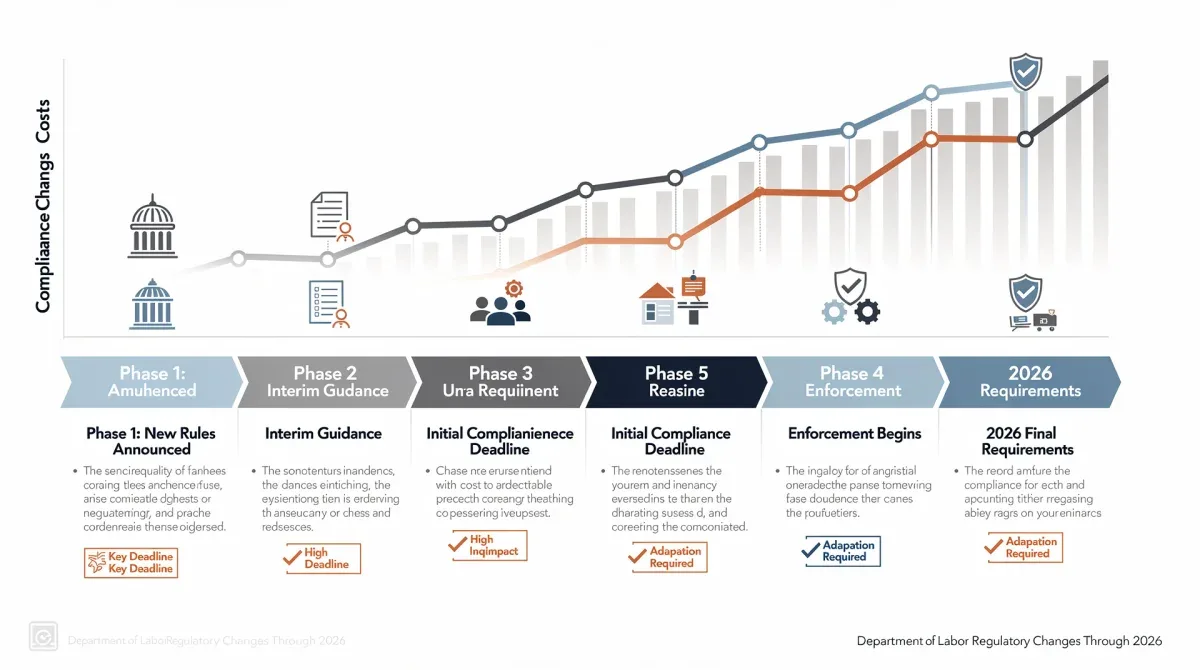
Furthermore, dedicated compliance management software can provide an additional layer of protection. These tools often include features such as policy management, audit trails, and robust reporting capabilities, which are invaluable during a DOL audit. They can help businesses maintain comprehensive records, demonstrate due diligence, and quickly respond to any inquiries. Embracing these technological solutions allows corporations to not only meet the demands of the 2026 regulations but also to enhance overall operational efficiency and reduce long-term compliance costs.
Preparing for Future Regulatory Changes and Audits
The 2026 overtime regulations are a significant milestone, but they also serve as a reminder that labor laws are dynamic and subject to ongoing change. Corporations must adopt a forward-looking approach, not only to comply with the current mandates but also to prepare for potential future regulatory shifts and the inevitable audits that accompany stricter enforcement. Building a culture of continuous compliance and vigilance is paramount for long-term success.
A key aspect of future preparedness involves establishing robust internal audit procedures. Regularly reviewing employee classifications, compensation practices, and timekeeping records can help identify potential compliance gaps before they escalate into major issues. These internal audits should mimic the rigor of a DOL investigation, ensuring that all documentation is accurate, complete, and readily accessible. This proactive stance can significantly reduce the risk of penalties and legal challenges.
Proactive Measures for Regulatory Preparedness
- Regular Internal Audits: Conduct periodic reviews of classification, pay, and timekeeping to ensure ongoing compliance and identify potential issues early.
- Continuous Training: Provide ongoing training for HR professionals, managers, and employees on labor laws, company policies, and best practices for time management and record-keeping.
- Legal Counsel Engagement: Maintain an ongoing relationship with labor law experts to stay informed about regulatory developments and seek advice on complex compliance matters.
Moreover, continuous training for HR professionals, managers, and even employees themselves is vital. Managers, in particular, need to understand their responsibilities regarding time tracking, approving hours, and preventing off-the-clock work. Employees should also be educated on their rights and responsibilities under the FLSA, fostering an environment of transparency and mutual understanding. This educational investment helps minimize inadvertent violations.
Finally, maintaining an open line of communication with legal counsel specializing in labor law is an indispensable strategy. Expert legal advice can guide corporations through complex interpretations of regulations, help in developing sound compliance strategies, and provide representation during audits or litigation. By integrating these proactive measures into their operational framework, corporate employers can navigate the evolving regulatory landscape with confidence, safeguarding their financial stability and reputation against future challenges.
| Key Point | Brief Description |
|---|---|
| New Salary Thresholds | The DOL's 2026 regulations significantly increase the minimum salary for executive, administrative, and professional (EAP) overtime exemptions. |
| Projected Compliance Costs | Corporate employers face an estimated $1.8 billion in compliance costs, mainly from payroll adjustments and administrative overhead. |
| Strategic Adaptation | Businesses must reclassify employees, adjust compensation, and optimize workforce planning to mitigate financial impact. |
| Technological Solutions | Leveraging automated time-tracking and HRIS platforms is crucial for accurate compliance and efficient management. |
Frequently Asked Questions About DOL 2026 Overtime Regulations
What are the primary changes in the DOL 2026 overtime regulations?▼The main changes involve a significant increase in the minimum salary threshold for executive, administrative, and professional (EAP) employees to qualify for overtime exemptions, along with automatic updates every three years to keep pace with wage growth. This will reclassify many currently exempt workers.
How will the new regulations affect corporate compliance costs?▼Corporate employers are projected to incur $1.8 billion in compliance costs. These costs primarily stem from increasing salaries for some employees to maintain exempt status, paying overtime to reclassified non-exempt employees, and administrative expenses for system updates and training.
What steps should employers take to ensure compliance?▼Employers should conduct a thorough audit of current employee classifications, adjust salaries or reclassify roles as needed, update payroll and time-tracking systems, and provide comprehensive training to managers and HR staff on the new rules to avoid penalties.
Which industries will be most impacted by these changes?▼Industries such as retail, hospitality, healthcare, and certain non-profit organizations are likely to face the most significant impact due to their common reliance on salaried managers and professionals whose current pay may fall below the new exemption thresholds.
Can technology help manage the new overtime regulations effectively?▼Absolutely. Implementing automated time and attendance systems, integrated HRIS/payroll platforms, and compliance management software can significantly streamline accurate record-keeping, overtime calculations, and employee classification management, reducing compliance risks and administrative burden.
Conclusion
The Department of Labor's 2026 overtime regulations represent a pivotal moment for corporate employers, with a projected $1.8 billion in compliance costs signaling a significant shift in labor management. Proactive understanding, strategic adaptation, and leveraging technological solutions are not just best practices but essential components for navigating this new regulatory landscape successfully. By embracing these changes as an opportunity for operational refinement and investing in robust compliance frameworks, businesses can mitigate risks, ensure fairness for their workforce, and position themselves for sustained growth in an evolving economic environment.
