Will Congress Pass 2026 Appropriations Bill on Time?
The 2026 Appropriations Bill faces critical bipartisan negotiations as Congress races against the October 1 deadline, with potential government shutdown implications if an agreement isn't reached on federal spending.
As the calendar pages turn, a familiar tension grips Washington: Will Congress Pass the 2026 Appropriations Bill Before the October 1 Deadline? Inside the Bipartisan Spending Negotiations, the stakes are incredibly high, influencing everything from national defense to social services. This annual legislative dance is a crucial test of political will and compromise, with profound implications for the entire nation.
Understanding the Appropriations Process
The appropriations process is the mechanism by which Congress funds the federal government. It's a complex, multi-stage endeavor that begins long before the fiscal year starts on October 1st. Each year, Congress must pass 12 individual appropriations bills, or an omnibus bill, to keep government agencies running. Failure to do so leads to a government shutdown, which can have significant economic and social consequences.
This process is rooted in the U.S. Constitution, which grants Congress the "power of the purse." This fundamental authority ensures that no federal funds can be spent without congressional approval, making the appropriations bills some of the most critical pieces of legislation passed annually. The sheer volume of decisions, from military funding to environmental protection, makes these negotiations incredibly intricate and often contentious.
The President's Budget Request
- Initial Proposal: The process formally begins with the President submitting a budget request to Congress, typically in February. This document outlines the administration's spending priorities and revenue proposals for the upcoming fiscal year.
- Guidance, Not Law: It's important to understand that the President's budget is merely a recommendation. Congress is not obligated to adopt any of its proposals, though it often serves as a starting point for discussions and debates.
- Agency Input: The President's budget is compiled after extensive input from various federal agencies, reflecting their needs and objectives for the coming year.
Following the President's request, congressional committees, particularly the House and Senate Appropriations Committees, begin their work. They hold hearings, review agency requests, and draft their own versions of the appropriations bills. This is where the real legislative heavy lifting begins, as members of Congress grapple with competing demands and limited resources.
The appropriations process is a delicate balance of competing interests, political ideologies, and practical necessities. Each bill is a reflection of national priorities, and the negotiations often reveal deep divisions within Congress regarding the appropriate role and size of government. The constant pressure of the October 1 deadline adds an element of urgency, forcing compromises that might otherwise be unattainable.
Key Players and Their Roles in Spending Negotiations
Passing the 2026 Appropriations Bill involves a complex interplay of various political actors, each with their own agendas and influences. Understanding who these players are and their respective roles is crucial to grasping the dynamics of the spending negotiations. From party leaders to committee chairs, every individual contributes to the intricate legislative dance that ultimately determines federal funding.
The process is inherently collaborative yet adversarial, as different factions vie for resources and push their policy priorities. The success or failure of reaching an agreement by the October 1 deadline often hinges on the ability of these key players to find common ground and forge compromises, even amidst deep ideological divides. Their influence extends beyond mere votes, shaping the narrative and trajectory of the entire debate.
Congressional Leadership
- Speaker of the House: As the leader of the House of Representatives, the Speaker plays a pivotal role in setting the legislative agenda and influencing the passage of appropriations bills.
- Senate Majority Leader: Analogous to the Speaker, the Senate Majority Leader controls the flow of legislation in the Senate and is instrumental in guiding spending bills through the upper chamber.
- Minority Leaders: While not holding the same power, minority leaders wield significant influence by articulating their party's positions, organizing opposition, and negotiating concessions.
Beyond the top leadership, the chairs and ranking members of the House and Senate Appropriations Committees are central figures. These individuals possess deep expertise in federal spending and often serve as the primary negotiators for their respective parties. Their ability to bridge divides and find bipartisan solutions is often the determining factor in avoiding a government shutdown.
Lobbyists and special interest groups also play a significant, albeit often less visible, role. They advocate for specific funding allocations, representing diverse sectors from defense contractors to environmental organizations. Their influence can shape legislative priorities and impact the final composition of the appropriations bills. The constant push and pull between these various stakeholders create a dynamic and often unpredictable negotiation environment.
The October 1 Deadline: Why It Matters
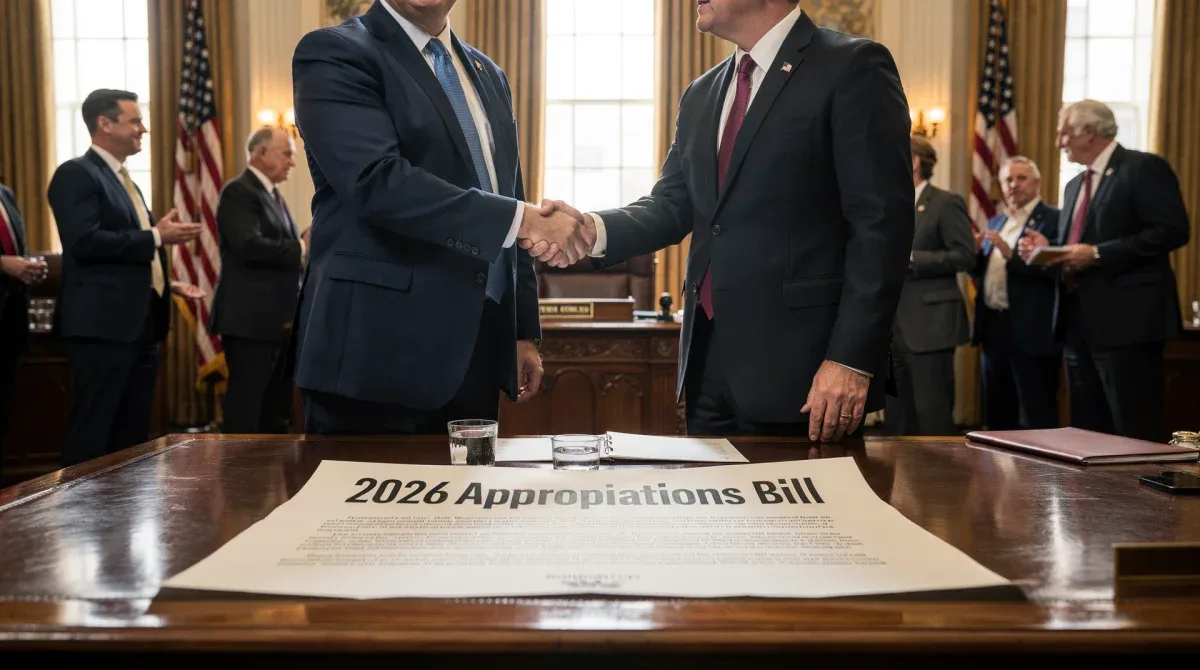
The October 1 deadline is not merely an arbitrary date on the calendar; it marks the beginning of the new fiscal year for the U.S. government. If Congress fails to pass the 2026 Appropriations Bill, or at least a continuing resolution (CR), by this date, a government shutdown ensues. This has wide-ranging implications, affecting millions of federal employees and the public services they provide.
A shutdown means that non-essential government operations cease, federal workers are furloughed, and critical services can be disrupted. While essential personnel, such as those involved in national security or public safety, typically continue to work, they often do so without immediate pay, creating significant financial hardship. The economic impact can be substantial, with lost productivity and a dent in consumer confidence.
Consequences of a Government Shutdown
- Furloughs and Lost Wages: Hundreds of thousands of federal employees may be furloughed, leading to lost income and economic uncertainty for their families.
- Disruption of Services: National parks close, passport applications are delayed, and scientific research may halt, impacting various aspects of daily life and long-term projects.
- Economic Impact: Shutdowns can reduce GDP growth, disrupt financial markets, and erode public trust in government's ability to function effectively.
- Damage to National Image: Repeated shutdowns can project an image of political instability on the international stage, potentially affecting foreign relations and economic partnerships.
The pressure of this deadline forces Congress to confront difficult choices and often leads to last-minute, high-stakes negotiations. The threat of a shutdown serves as a powerful motivator for both parties to find a compromise, even when their ideological differences seem insurmountable. However, political brinkmanship can sometimes override this urgency, leading to prolonged impasses and actual shutdowns.
Understanding the implications of missing the October 1 deadline highlights the critical importance of the Congress Appropriations Bill process. It underscores why these bipartisan spending negotiations are not just about numbers, but about the fundamental functioning of the federal government and its capacity to serve the American people effectively. The deadline acts as a constant reminder of the responsibilities held by elected officials.
Bipartisan Spending Negotiations: Challenges and Opportunities
Bipartisan spending negotiations for the 2026 Appropriations Bill are inherently challenging, characterized by deep-seated ideological differences and competing priorities. Democrats and Republicans often hold divergent views on the appropriate level of government spending, taxation, and the allocation of resources across various sectors. These differences are exacerbated by political pressures and the upcoming election cycles.

One of the primary challenges lies in reconciling demands for increased spending in certain areas, such as defense or social programs, with calls for fiscal restraint and deficit reduction. Each party typically champions different spending priorities, making it difficult to find a middle ground that satisfies enough members to pass legislation. The process often becomes a zero-sum game, where gains for one side are perceived as losses for the other.
Common Sticking Points
- Defense vs. Non-Defense Spending: Republicans often advocate for robust defense budgets, while Democrats prioritize non-defense discretionary spending on areas like education, healthcare, and environmental protection.
- Social Programs: Debates frequently arise over funding for programs such as Medicare, Medicaid, and Social Security, with disagreements on eligibility, benefit levels, and long-term sustainability.
- Debt Ceiling and Fiscal Responsibility: Discussions about the appropriations bill often become intertwined with broader debates about the national debt and the debt ceiling, adding another layer of complexity to negotiations.
Despite these challenges, opportunities for bipartisan cooperation do exist. Areas of common interest, such as infrastructure improvements, disaster relief, or certain aspects of national security, can serve as starting points for collaboration. Negotiators often seek out these "sweet spots" where both parties can claim a victory, paving the way for broader agreements.
Successful bipartisan negotiations require a willingness to compromise, a focus on shared national interests, and effective communication between party leaders. The ability to depoliticize certain aspects of the budget and to find creative solutions that address core concerns from both sides is paramount. While difficult, reaching a bipartisan consensus on the Congress Appropriations Bill is essential for stable governance and avoiding disruptive shutdowns.
Potential Outcomes and Their Implications
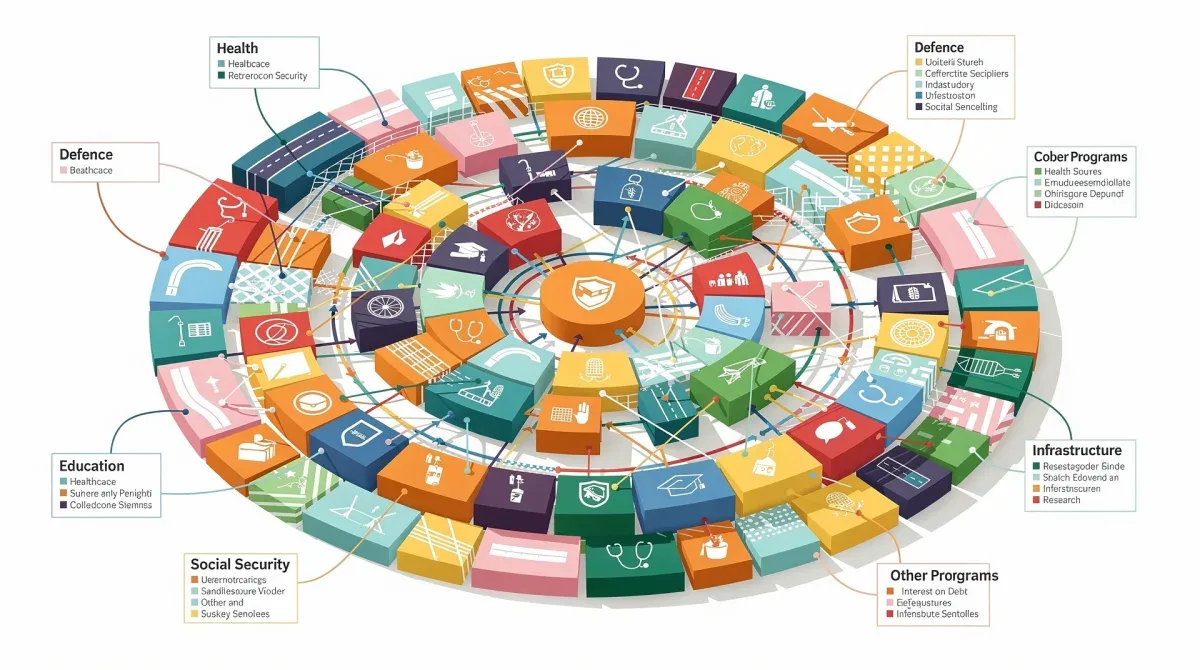
As the October 1 deadline for the 2026 Appropriations Bill approaches, several potential outcomes loom, each with its own set of implications for the federal government and the American public. The most desirable outcome is the timely passage of all 12 individual appropriations bills, or an omnibus bill, signifying a functional and cooperative Congress. This would provide agencies with certainty, allow for long-term planning, and avoid any disruptions to government services.
However, given the historical context of partisan divisions, other scenarios are often more likely. One common outcome is the passage of a continuing resolution (CR). A CR temporarily funds the government at existing levels, typically for a few weeks or months, buying Congress more time to finalize the full appropriations bills. While a CR avoids a shutdown, it can hinder new projects and efficient resource allocation, as agencies are forced to operate under old spending parameters.
Alternative Scenarios
- Continuing Resolution (CR): A temporary measure that keeps the government funded at previous levels, avoiding a shutdown but delaying full budget decisions.
- Omnibus Bill: A single, large legislative package that combines multiple appropriations bills into one, often passed in the final hours before a deadline to avoid a shutdown.
- Government Shutdown: The most disruptive outcome, occurring if no agreement (neither full appropriations nor a CR) is reached by October 1, leading to furloughs and service interruptions.
Another possibility is the passage of an omnibus bill, which bundles several or all appropriations bills into one massive piece of legislation. While this can be an effective way to avoid a shutdown, it often means that individual bills receive less scrutiny, and controversial provisions can be tucked into the larger package. It's a common tactic when time is short and consensus is elusive on individual measures.
The least desirable outcome, of course, is a government shutdown. This not only disrupts federal services and impacts employees but also sends a negative signal about the stability and functionality of American governance. Each potential outcome of the Congress Appropriations Bill negotiations carries significant weight, shaping the operational capacity of the government and public perception of its effectiveness.
Historical Context of Appropriations Deadlines
The struggle to pass appropriations bills by the October 1 deadline is not a new phenomenon; it has been a recurring theme in American political history for decades. The legislative calendar is often fraught with brinkmanship, partisan standoffs, and last-minute deals. Understanding this historical context provides valuable insight into the current challenges facing the 2026 Appropriations Bill.
Government shutdowns, while disruptive, are also not unprecedented. The U.S. has experienced numerous shutdowns of varying lengths throughout its history, particularly since the 1970s. These events often stem from deep ideological divides over fiscal policy, sometimes exacerbated by divided government where different parties control the White House and Congress, or even different chambers of Congress.
Notable Historical Instances
- 1995-1996 Shutdowns: A protracted standoff between President Bill Clinton and a Republican-controlled Congress over budget priorities, leading to two shutdowns.
- 2013 Shutdown: A 16-day shutdown triggered by disagreements over funding for the Affordable Care Act under President Barack Obama.
- 2018-2019 Shutdown: The longest government shutdown in U.S. history, lasting 35 days, centered on funding for a border wall under President Donald Trump.
These historical precedents demonstrate that the October 1 deadline often becomes a focal point for broader political battles. Parties use the appropriations process as leverage to push for their policy agendas, sometimes willing to risk a shutdown to achieve their goals. The public often becomes a casualty in these political games, experiencing disruptions to services and economic uncertainty.
The recurring nature of these debates underscores the inherent tension in the American system of checks and balances. While designed to prevent any single branch from becoming too powerful, it can also lead to legislative gridlock when compromise is elusive. The history of the Congress Appropriations Bill negotiations is a testament to the enduring challenges of governing in a diverse and often polarized political landscape.
The Public's Role and Impact
While the appropriations process largely unfolds within the halls of Congress, the public plays an undeniable role, both directly and indirectly, in shaping these critical spending negotiations. Public opinion, advocacy groups, and the electoral cycle all exert pressure on lawmakers, influencing their decisions and the urgency with which they approach the October 1 deadline for the 2026 Appropriations Bill.
Voters express their preferences through elections, sending representatives to Washington who are expected to champion their interests and values. When constituents voice strong opinions on specific spending priorities, such as healthcare, education, or defense, these messages resonate with their elected officials. This direct feedback can influence how legislators vote on appropriations bills and how willing they are to compromise.
How the Public Influences Appropriations
- Electoral Accountability: Voters hold politicians accountable for their fiscal decisions, especially those impacting local communities, influencing future election outcomes.
- Advocacy and Lobbying: Citizen groups, non-profits, and industry associations advocate for specific funding allocations, representing diverse public interests.
- Media Scrutiny: Public and media attention on potential government shutdowns or controversial spending items can increase pressure on Congress to act responsibly.
Furthermore, the media plays a crucial role in informing the public about the ongoing negotiations and the potential consequences of a government shutdown. Increased media scrutiny often heightens public awareness and can mobilize public pressure on lawmakers to reach a resolution. A well-informed public is better equipped to understand the stakes and demand accountability from their representatives.
Ultimately, the impact of the Congress Appropriations Bill is felt by every American. From the quality of public services to the strength of the economy, these spending decisions touch nearly every aspect of daily life. Therefore, the public's engagement, whether through voting, advocacy, or simply staying informed, is vital in ensuring that lawmakers prioritize the nation's best interests as they navigate the complex and often contentious appropriations process.
| Key Aspect | Brief Description |
|---|---|
| October 1 Deadline | Start of federal fiscal year; failure to pass bills triggers shutdown. |
| Bipartisan Negotiations | Discussions between parties to reconcile spending priorities. |
| Government Shutdown | Cessation of non-essential services due to lack of funding. |
| Continuing Resolution | Temporary funding measure to avoid immediate shutdown. |
Frequently Asked Questions About Appropriations
What is the 2026 Appropriations Bill?▼The 2026 Appropriations Bill refers to the series of 12 individual bills Congress must pass to fund the federal government for the fiscal year beginning October 1, 2025, and ending September 30, 2026. These bills allocate discretionary spending across all federal agencies and programs.
Why is the October 1 deadline so important?▼October 1st marks the start of the new fiscal year. If Congress fails to pass the appropriations bills or a continuing resolution by this date, the federal government enters a shutdown. This means non-essential services cease, and many federal employees are furloughed, causing widespread disruption.
What happens during a government shutdown?▼During a government shutdown, federal agencies without enacted appropriations must halt non-essential operations. This can lead to closures of national parks, delays in processing passports and benefits, and hundreds of thousands of federal employees being sent home without pay, impacting the economy and public services.
What is a continuing resolution (CR)?▼A continuing resolution is a temporary funding measure passed by Congress to keep the government operating at current spending levels for a specified period, typically a few weeks or months. It is used to avoid a shutdown when full appropriations bills are not yet finalized, buying more time for negotiations.
How do bipartisan negotiations influence the bill's passage?▼Bipartisan negotiations are crucial because both major parties must agree on spending levels and allocations. Disagreements often arise over defense versus non-defense spending, social programs, and fiscal priorities. Successful passage requires compromise and finding common ground to secure enough votes in both the House and Senate.
Conclusion
The journey to pass the 2026 Appropriations Bill before the October 1 deadline is a testament to the enduring complexities of American governance. The bipartisan spending negotiations represent a critical annual exercise in political will, compromise, and legislative strategy, directly impacting the functionality of the federal government and the lives of millions. While the path is often fraught with challenges, the imperative to avoid a government shutdown typically drives lawmakers towards a resolution, highlighting the profound importance of these fiscal decisions for the nation's stability and progress.
