Commercial Real Estate Realignment: Why 42% Downsize
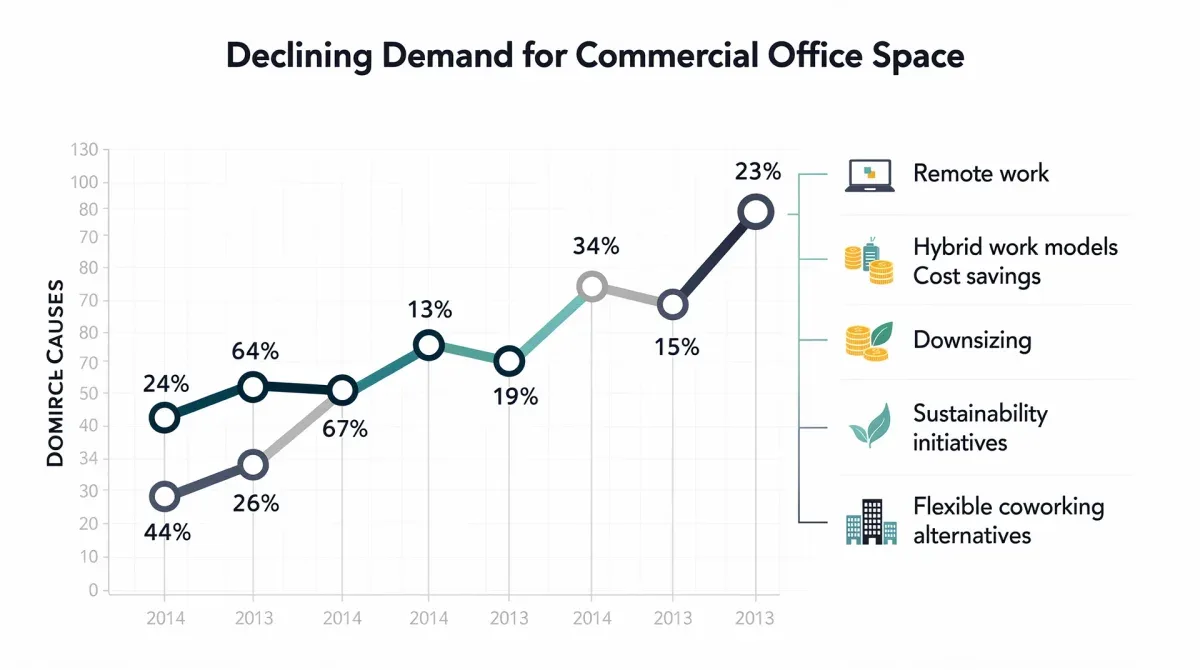
Approximately 42% of national corporations are significantly downsizing their office footprints this year, driven by the widespread adoption of hybrid work models, the imperative for cost optimization, and a strategic realignment of their commercial real estate portfolios.
The landscape of commercial real estate realignment is undergoing a dramatic transformation, with a striking 42% of national corporations planning to significantly downsize their office footprints this year. This isn't merely a fleeting trend but a fundamental shift in how businesses perceive and utilize physical workspace. What factors are driving this unprecedented reduction in office square footage, and what does it mean for the future of work and urban centers?
The rise of hybrid work models and remote flexibility
The COVID-19 pandemic undeniably accelerated the adoption of remote and hybrid work models, pushing companies to re-evaluate the necessity of traditional office spaces. What began as a temporary measure has evolved into a strategic operational advantage for many, offering employees greater flexibility and companies significant cost savings. This paradigm shift is at the heart of the current commercial real estate realignment.
Redefining the office as a hub for collaboration
The office is no longer seen as the sole place for all work but rather a central hub for specific activities. Companies are increasingly designing their spaces for collaboration, innovation, and company culture building, rather than individual heads-down work that can be done from anywhere.
- Enhanced employee satisfaction: Flexible work options often lead to higher job satisfaction and improved work-life balance.
- Access to broader talent pools: Remote work allows companies to hire talent regardless of geographic location.
- Reduced commuting stress: Less time spent commuting contributes to employee well-being and productivity.
This redefinition impacts office design, moving away from traditional cubicle farms towards flexible workstations, dedicated meeting rooms, and collaborative zones. The goal is to make the in-office experience valuable enough to warrant the commute, fostering a sense of community and shared purpose that is harder to replicate virtually. The shift isn't about abandoning the office entirely, but rather optimizing its function and size to fit a more dynamic work reality. This strategic approach to workspace is a core component of the ongoing commercial real estate realignment.
Ultimately, the decision to downsize is deeply intertwined with a company's commitment to hybrid work. It reflects a belief that employees can maintain or even increase productivity outside traditional office walls, while still valuing the strategic importance of in-person interaction. This balanced view is reshaping demand for office space, leading to significant reductions in corporate real estate portfolios across the nation. The emphasis is now on quality over quantity, with spaces designed to maximize engagement and utility for those times when employees do gather.
Cost optimization as a primary driver
Beyond the philosophical shift in work culture, the tangible financial benefits of downsizing office footprints are a compelling factor for many corporations. Commercial real estate, particularly in major urban centers, represents a substantial operational expense. Reducing this overhead can significantly impact a company's bottom line, freeing up capital for other strategic investments or to buffer against economic uncertainties.
Analyzing real estate expenditure
For decades, large office spaces were seen as a symbol of corporate success and stability. However, with rising rents, maintenance costs, and utilities, these assets have become liabilities when underutilized. Companies are now scrutinizing their real estate portfolios with an eye towards efficiency and cost reduction.

- Rent and lease savings: Directly reducing square footage leads to lower monthly rent or lease payments.
- Operational cost reductions: Smaller offices incur lower utility bills, cleaning services, and general maintenance expenses.
- Capital reallocation: Funds saved on real estate can be reinvested into technology, employee development, or R&D.
The economic climate also plays a significant role. With inflation concerns and potential recessionary pressures, businesses are under increased pressure to optimize every aspect of their spending. Real estate, often one of the largest fixed costs, becomes a prime target for efficiency gains. This strategic cost-cutting is a direct consequence of the commercial real estate realignment, allowing companies to maintain profitability and agility in a volatile market.
Furthermore, the ability to predict future office needs has become more complex. Companies are opting for shorter lease terms or more flexible co-working solutions, which mitigate long-term financial commitments to potentially oversized spaces. This cautious approach to real estate investment reflects a broader trend of corporate agility, where adaptability to changing market conditions is prioritized. The goal is to create a more resilient financial structure, less burdened by static overheads, enabling companies to pivot and grow more effectively. This fiscal prudence underscores the rationale behind many corporate downsizing decisions.
Technological advancements enabling distributed teams
The feasibility of widespread remote and hybrid work would be severely limited without the concurrent advancements in technology. Collaboration tools, cloud computing, and robust internet infrastructure have made it possible for teams to remain connected and productive, regardless of their physical location. These technological leaps are fundamental to the commercial real estate realignment we observe today.
The digital toolkit for remote productivity
Modern enterprises leverage an array of digital platforms that simulate the in-office experience, and in many cases, enhance it. Video conferencing platforms, project management software, and secure virtual private networks (VPNs) are now standard tools, allowing seamless communication and task execution.
- Seamless virtual meetings: High-quality video and audio conferencing reduce the need for physical presence.
- Cloud-based collaboration: Shared documents and real-time editing foster teamwork across distances.
- Robust cybersecurity: Enhanced security protocols protect company data in distributed environments.
These tools not only facilitate remote work but also often streamline workflows, leading to increased efficiency. The investment in these technologies has proven to be a worthwhile trade-off for the reduced expenditure on physical office space. Companies are finding that digital infrastructure can be more adaptable and scalable than brick-and-mortar facilities, allowing them to expand or contract their workforce without immediate real estate implications. This technological foundation is a critical enabler for the ongoing commercial real estate realignment.

The continuous evolution of artificial intelligence and automation further promises to augment remote work capabilities, making distributed teams even more effective. As these technologies mature, the reliance on a central physical office for routine tasks diminishes further, reinforcing the trend of downsizing. The focus shifts from managing physical space to optimizing digital workspaces, which offers greater flexibility and cost control. This technological empowerment is a driving force behind the strategic decisions corporations are making regarding their real estate portfolios, ensuring productivity and connectivity in a decentralized model.
Shifting employee expectations and talent acquisition
The pandemic didn't just change how companies operate; it fundamentally altered employee expectations regarding work arrangements. A significant portion of the workforce now values flexibility and autonomy, making remote or hybrid options a key factor in job satisfaction and career choices. Companies that fail to adapt risk losing out on top talent, further propelling the commercial real estate realignment.
Attracting and retaining the modern workforce
In a competitive job market, offering flexible work environments has become a powerful recruitment and retention tool. Employees, particularly younger generations, are seeking roles that offer a better balance between professional life and personal commitments, which traditional office-centric models often fail to provide.
- Work-life balance: Flexibility allows employees to better manage personal responsibilities and reduce stress.
- Increased autonomy: Trusting employees to manage their own schedules can boost morale and ownership.
- Diverse workforce: Remote work opens doors to individuals who may face barriers to traditional office attendance.
Companies are recognizing that to attract and retain the best talent, they must align their work policies with these evolving expectations. A smaller, more purposefully designed office space, complemented by robust remote work infrastructure, signals a progressive and employee-centric culture. This strategy not only enhances the employer brand but also contributes to higher productivity and lower turnover rates. The commercial real estate realignment is thus not just a financial decision, but a strategic human resources one, ensuring companies remain competitive in the war for talent.
Moreover, the emphasis on employee well-being has grown significantly. Companies are understanding that a happy and healthy workforce is a productive one. Offering the choice of where and how to work contributes directly to this, reducing burnout and fostering a more engaged employee base. This cultural shift, driven by employee demand, reinforces the move away from rigid office requirements and towards more agile, adaptable work environments. It's a clear indication that the future of work is inherently flexible, and real estate strategies must reflect this new reality to succeed.
The environmental and sustainability imperative
Beyond financial and operational advantages, many corporations are also recognizing the environmental benefits of downsizing their office footprints. Reducing the energy consumption associated with large commercial buildings aligns with broader corporate social responsibility (CSR) goals and contributes to a more sustainable business model. This aspect adds another layer of motivation to the commercial real estate realignment.
Greener operations through smaller spaces
Large office buildings require significant energy for heating, cooling, lighting, and ventilation. By reducing square footage, companies can substantially decrease their carbon emissions and overall environmental impact. This resonates with environmentally conscious consumers and investors, enhancing brand reputation.
- Lower energy consumption: Smaller spaces mean less electricity and fuel used for building operations.
- Reduced waste generation: Fewer occupants and smaller facilities generally lead to less waste.
- Sustainable commuting: Less frequent commutes for employees result in reduced transportation emissions.
The push for sustainability is not just a moral imperative but increasingly a business one. Regulatory pressures, investor expectations, and consumer preferences are all driving companies towards more eco-friendly practices. Downsizing real estate, therefore, becomes a tangible way to demonstrate commitment to environmental stewardship, integrating sustainability directly into the core operational strategy. This environmental consciousness is a growing factor in the ongoing commercial real estate realignment, reflecting a broader shift in corporate values.
Furthermore, the opportunity to retrofit smaller, more efficient spaces with green technologies becomes more feasible. Companies can invest in energy-efficient lighting, smart HVAC systems, and renewable energy sources for their reduced footprint, making their operations even more sustainable. This holistic approach to environmental responsibility, from reducing space to optimizing its green performance, positions corporations as leaders in sustainable business practices. It underscores that the decision to downsize is multifaceted, addressing not just immediate financial concerns but also long-term environmental goals, solidifying the trend of commercial real estate realignment.
Impact on urban centers and the future of cities
The widespread commercial real estate realignment, with 42% of corporations downsizing, has significant implications for urban centers and the broader economy. Cities that have historically relied on bustling office districts are now facing challenges related to reduced foot traffic, vacant properties, and a potential shift in their economic base. This necessitates adaptive strategies from urban planners and policymakers.
Repurposing urban landscapes
As traditional office spaces become less in demand, there's an increasing need to repurpose these buildings for alternative uses. This could include converting commercial properties into residential units, mixed-use developments, or specialized co-working and innovation hubs. The goal is to maintain urban vitality despite the changing nature of work.
- Residential conversions: Transforming vacant office buildings into housing can address urban housing shortages.
- Mixed-use developments: Integrating retail, residential, and smaller office spaces creates vibrant, self-sufficient communities.
- Co-working and flexible spaces: Providing adaptable workspaces for smaller businesses and remote workers supports a dynamic economy.
The economic impact extends to local businesses that depend on the daily influx of office workers, such as restaurants, cafes, and retail stores. Cities must foster new ecosystems that support a more diverse range of activities and attract a broader demographic. This might involve incentivizing new types of businesses, promoting cultural attractions, and investing in public infrastructure that supports a more distributed workforce. The commercial real estate realignment is not just a corporate challenge but a municipal one, requiring innovative urban planning.
Ultimately, the long-term health of urban centers will depend on their ability to adapt and innovate. This includes fostering a sense of community, enhancing public spaces, and creating environments where people want to live, work, and socialize, even if their primary workplace is remote. The transformation presents both challenges and opportunities for cities to reinvent themselves, becoming more resilient and diverse in their economic and social fabric. This ongoing evolution will shape the urban landscape for decades to come, driven by the fundamental shifts in corporate real estate strategy.
| Key Trend | Brief Description |
|---|---|
| Hybrid Work Adoption | Companies embrace flexible models, reducing daily office attendance and space needs. |
| Cost Optimization | Significant savings from reduced rent, utilities, and maintenance drive downsizing efforts. |
| Tech Enablement | Advanced collaboration tools and cloud computing support effective distributed teams. |
| Employee Expectations | Demand for flexibility influences corporate real estate decisions and talent strategies. |
Frequently asked questions about commercial real estate realignment
Why are 42% of national corporations downsizing their office footprints?▼National corporations are downsizing primarily due to the widespread adoption of hybrid work models, a strong focus on cost optimization, and the availability of advanced technologies that enable effective remote collaboration. Employee preferences for flexible work arrangements also play a significant role in this strategic shift.
What is the primary benefit for companies downsizing their office space?▼The primary benefit for companies downsizing their office space is significant cost reduction. This includes lower expenditures on rent, utilities, maintenance, and other operational overheads associated with larger physical footprints. These savings can then be reinvested into other strategic areas of the business.
How does hybrid work impact commercial real estate demand?▼Hybrid work models reduce the daily occupancy rates of traditional offices, leading to lower demand for large, dedicated workspaces. Companies instead seek smaller, more flexible offices designed for collaboration and occasional in-person meetings, driving the overall commercial real estate realignment.
Are companies completely abandoning physical offices?▼No, most companies are not completely abandoning physical offices. Instead, they are recalibrating their use. Offices are being reimagined as hubs for collaboration, innovation, and culture-building, rather than places for all daily individual tasks. This means smaller, more strategically designed spaces.
What are the implications for urban centers from this downsizing trend?▼Urban centers face challenges like increased office vacancies and reduced foot traffic for local businesses. However, this also presents opportunities for repurposing commercial buildings into residential or mixed-use developments, fostering more diverse and resilient urban environments that adapt to new work patterns.
Conclusion
The significant trend of 42% of national corporations downsizing their office footprints marks a pivotal moment in commercial real estate. This realignment is a complex interplay of factors, from the undeniable success of hybrid work models and the imperative for cost optimization to the enabling power of technological advancements and evolving employee expectations. Furthermore, the growing emphasis on environmental sustainability provides an additional layer of motivation for companies to rethink their physical presence. While this shift presents immediate challenges for urban centers and the commercial real estate sector, it also opens doors for innovation, allowing cities to reimagine their landscapes and companies to forge more agile, resilient, and employee-centric operational models. The future of work is undeniably more flexible, and the built environment is adapting to reflect this new reality, ensuring that commercial real estate continues to evolve as a dynamic support system for modern business.
